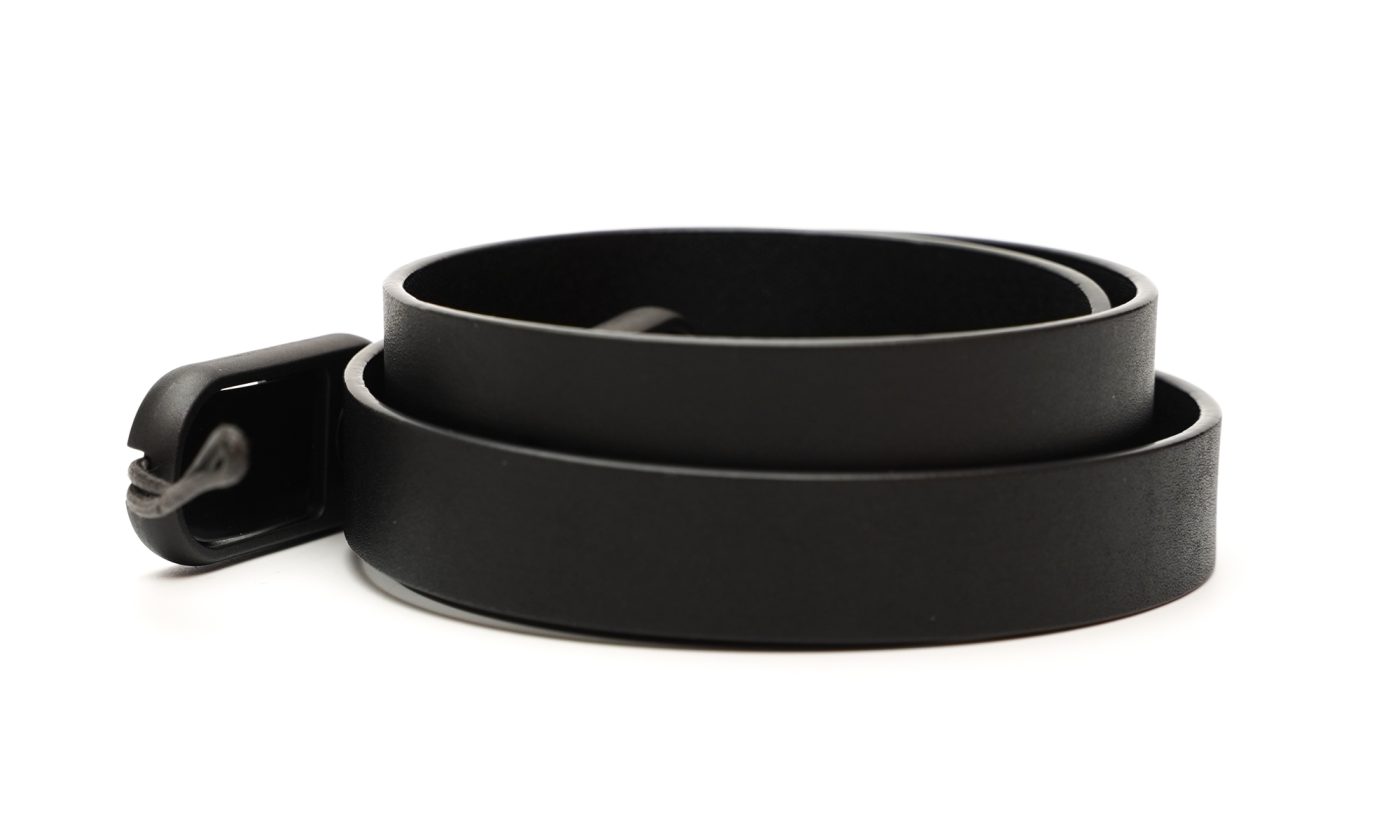
Today we’re taking a look at the new Form straps, as well as the Field Plate, from Peak Design.
Peak Design started with the Capture Clip, but quickly followed with their line of Slide straps. These straps took the market by storm, thanks to their unique quick-release system, ease of use, fast adjustments and sturdiness.
The company added several items to the lineup over the years, including lighter versions and wrist straps. However, despite iterative updates and special editions, the Slide straps remain the same: seatbelt webbing, sliding metal buckles and Anchor links.
Now, Peak Design decided to expand their range with the Form straps. These come in two flavors: Leather and Rope. The names are pretty self-explanatory, but as with everything details matter.
In the last month, I have been extensively testing two of these new straps. I also used extensively the company’s new tripod plate called the Field Plate. Let’s see how they performed.
Form Leather
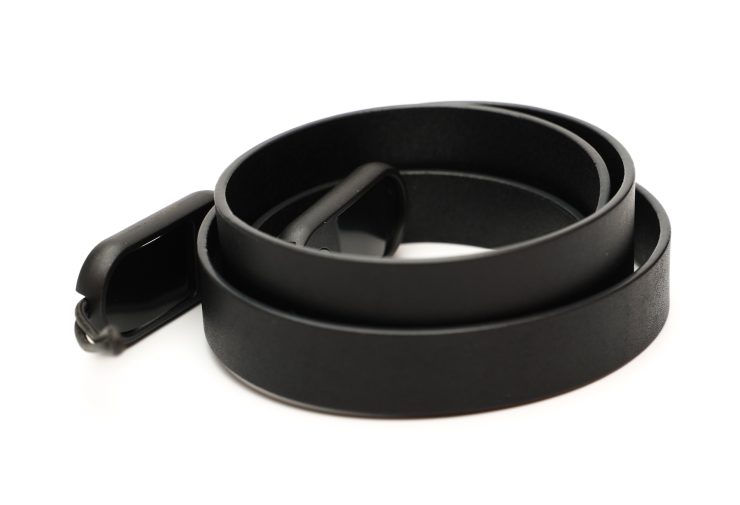
The first addition to the Peak Design lineup is the Form Leather line. Many photographers love the look and feel of leather straps. For some, it is reminiscent of a past era when cameras were smaller, prime lenses were the norm and each SLR shipped with a leather strap. For others, leather is simply more elegant.
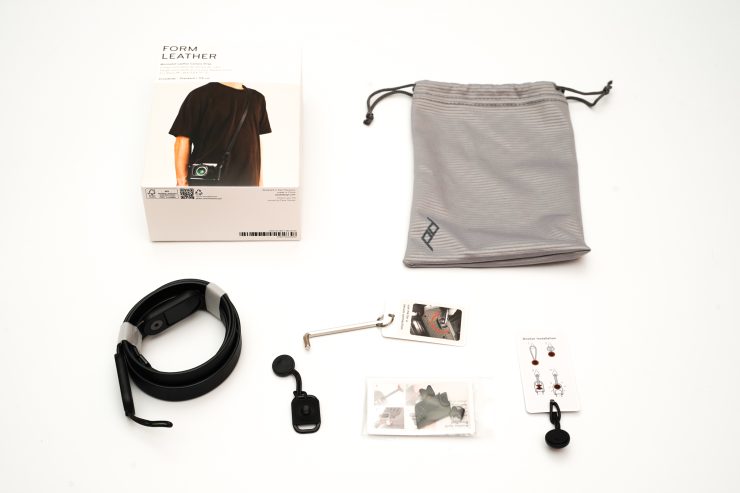
Form Leather straps come in four flavors. There’s a Cuff, mostly similar to the original Peak Design Cuff with seatbelt webbing. Then there are three neck straps, differentiated by their length: Long, Standard, Short and Neck. Each is offered in three colors: Tan, Amber or Black. I am testing the Standard Black.
In typical Peak Design fashion, the Form Leather strap ships with many extras. In addition to the strap, the package includes a pouch, four Anchors, an Anchor Mount (tiny plate attaching to the tripod mount on the camera), a hex tool and split rings to mount Anchors on smaller lugs.
The strap itself is understated and monochromatic.
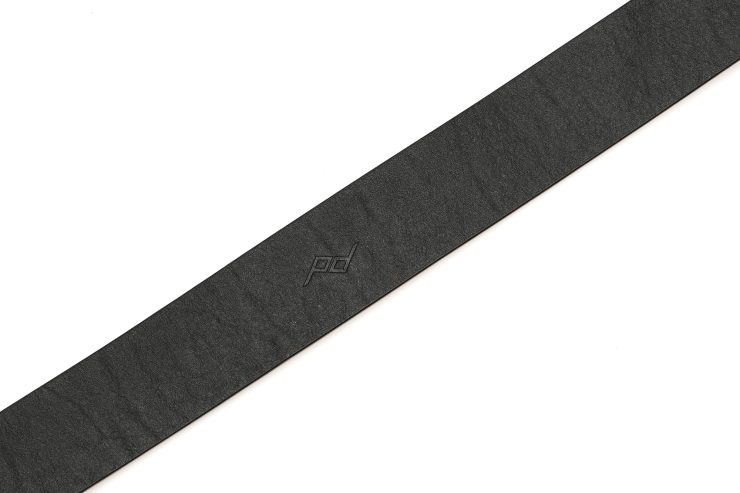
There is a discrete PD logo in the wider center section. There are otherwise no markings and no difference between the two sides. The leather is already supple and won’t need breaking in. This is probably the highest-quality leather strap I have ever used.
Contrary to Slide straps, there is no way to adjust the length on the Form Leather, so it is especially important to select the correct length (Form Rope has the same lengths):
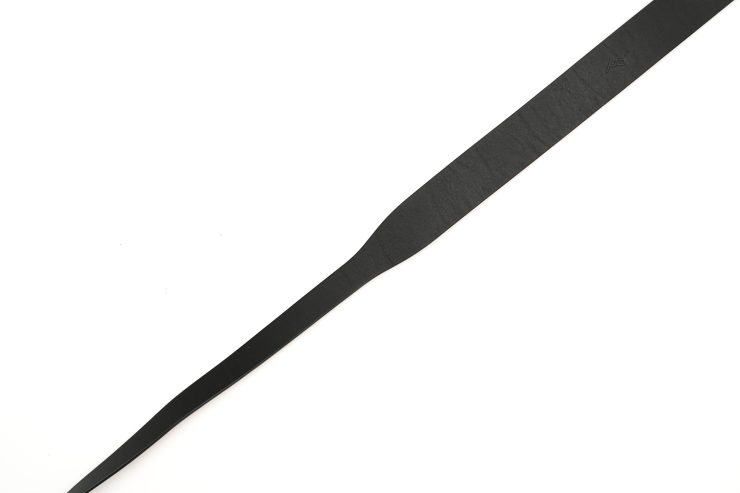
The Neck is obviously only wearable around… the neck, while the other three can be used crossbody, like slings. the Neck is 1.65cm (0.65”) wide all the way, while the others have a wider, 3cm (1.18”) section in the middle.
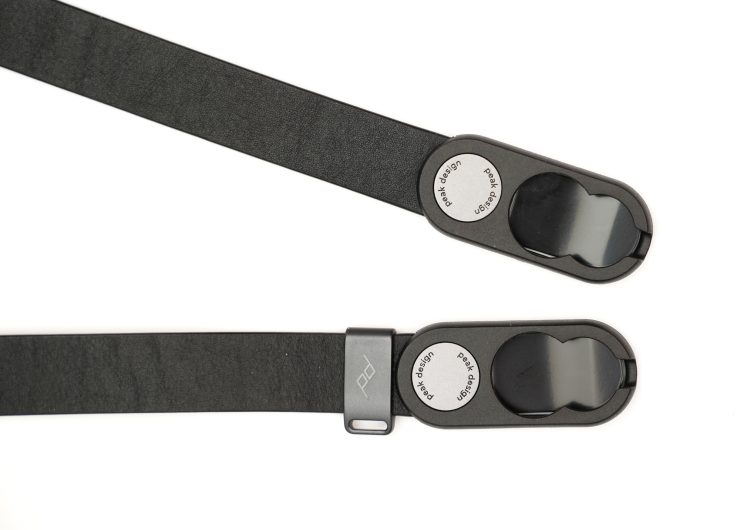
Each end sports an Anchor Link attachment point.
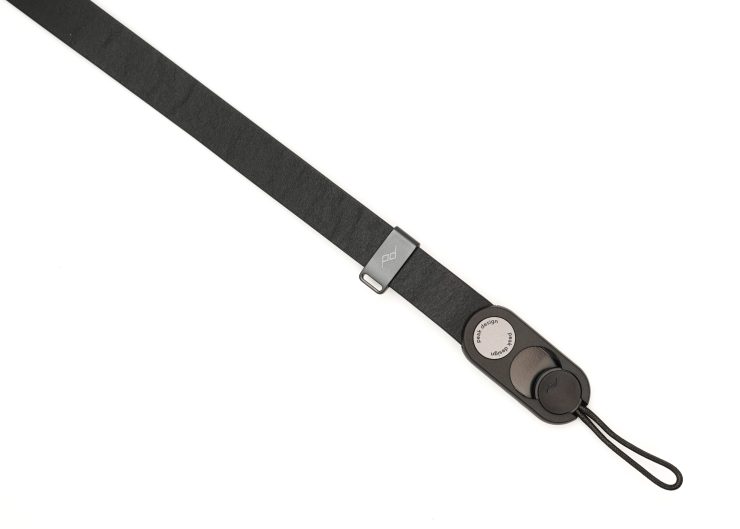
The straps also ship with 4 Anchors (2 for Neck and Short). Those are meant to always stay on the camera. The Anchor and Anchor Link join together to attach the strap to the camera, or remove it at will. Peak Design used to sell only black and red Anchors; they now offer them in a variety of colors. Each Anchor can support over 90kg (200lbs). Their cord section is made of three layers. The external one is color-matched with the strap; the middle layer is yellow to inform the user that it has started fraying; the inner one is red and warns that the Anchor shouldn’t be used. In over 10 years using Anchors, I have yet to see the yellow color.
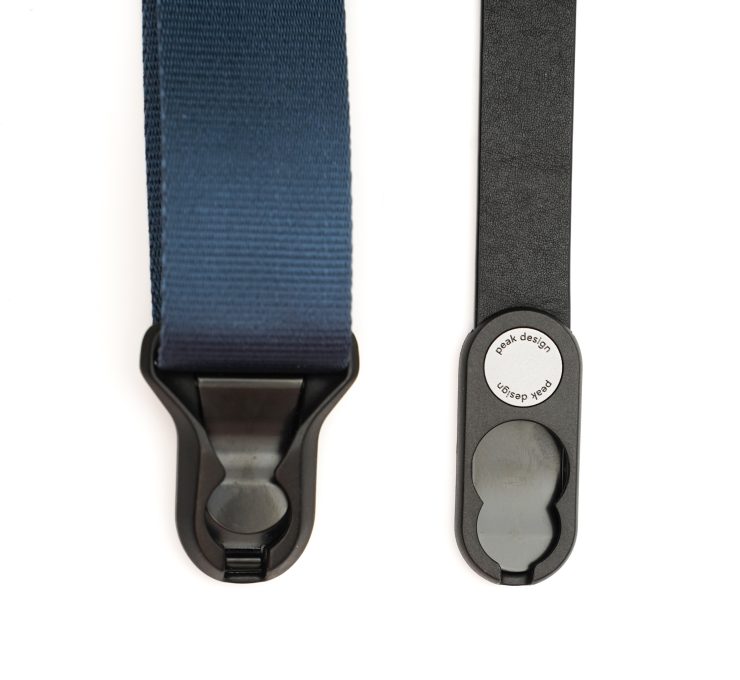
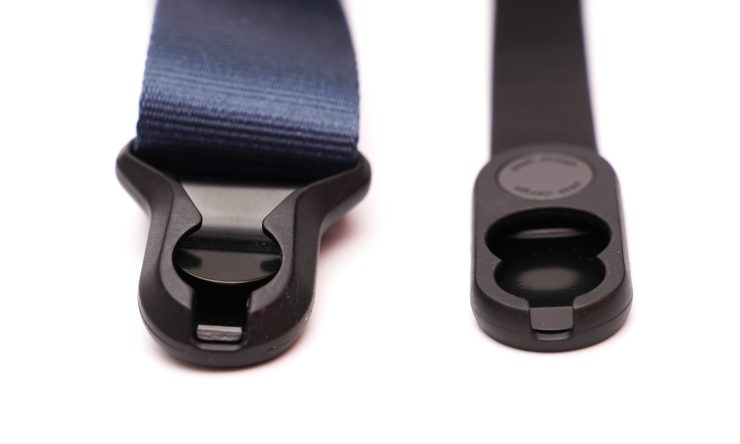
The Form straps use a new Anchor Link design. As seen on the pictures above, it is slimmer than the one found on a Slide Lite strap version 2. While the new Anchor Links are just as secure as the previous version, they are now quite as easy to operate. I used to be able to remove an Anchor one-handed, simply pressing down with my thumb. Now, I have to hold still and take my time. Not a major problem, but a notable difference. I do appreciate the slimmer profile, however.
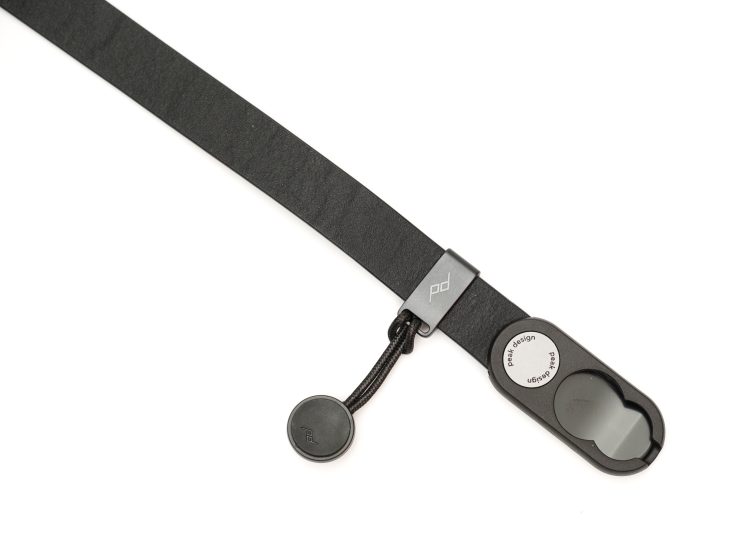
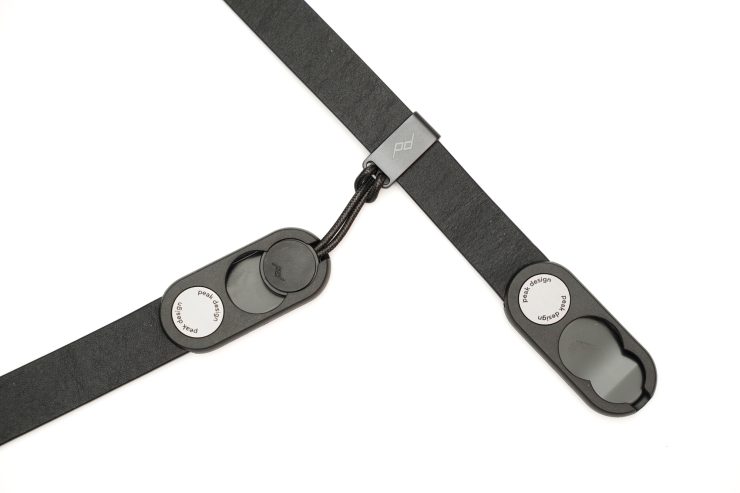
One end of the Form Leather strap had a sliding metal tab. The user can attach an Anchor on it and attach the other end of the strap to it, making a closed loop. This way, there is only one attachment point to the camera and the length of the loop can be adjusted to improve comfort. This works particularly well with smaller cameras.
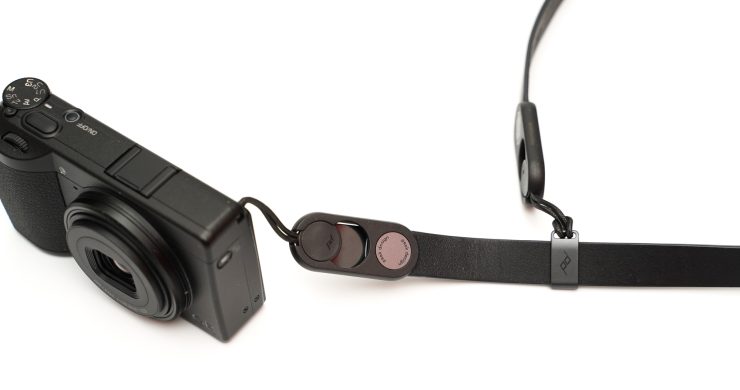
Form Leather’s look is an excellent match for vintage cameras or high-end compacts like the Ricoh GR IV pictured above.
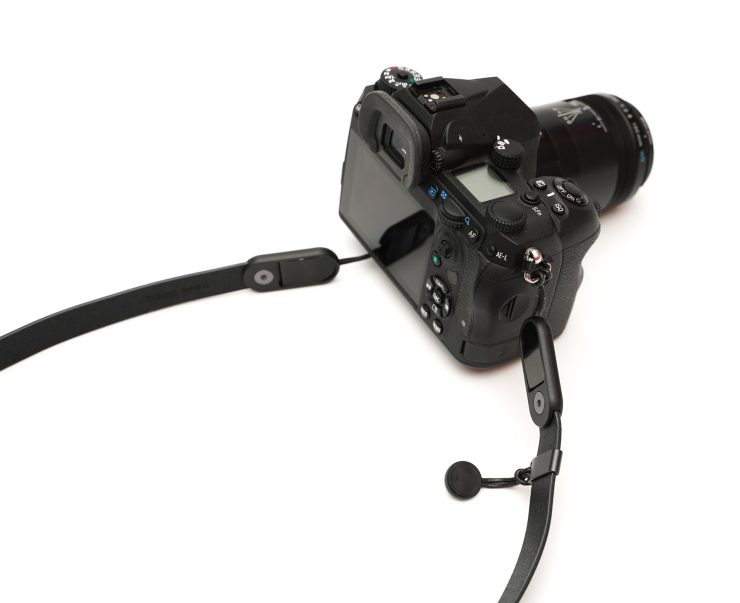
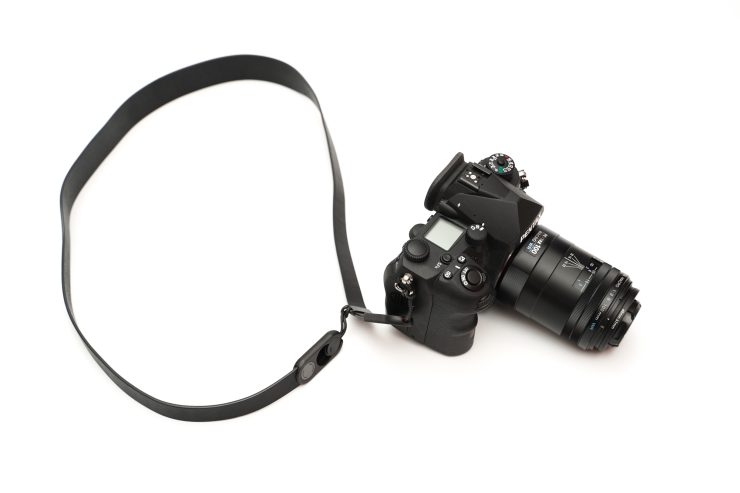
It also fits well with larger models such as the Pentax K-3 III shown here. In that case, as with most mirrorless cameras, it will be better to use both attachment points.
Form Rope Cuff
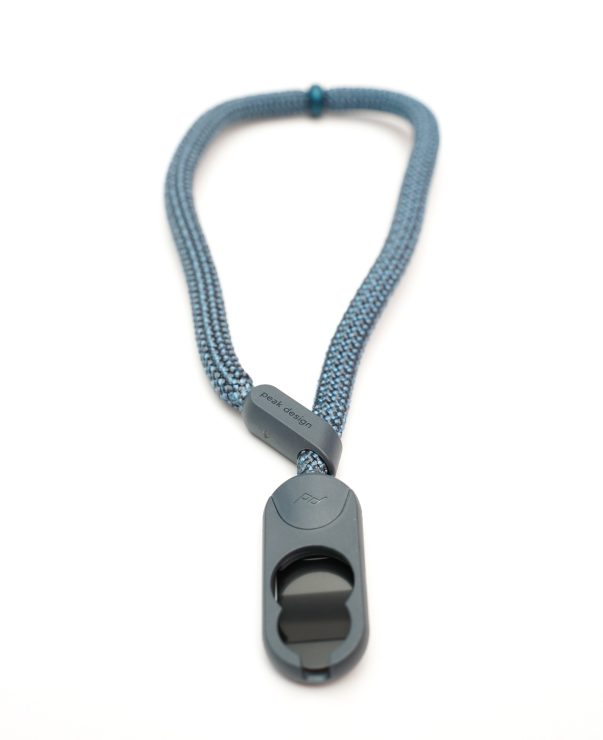
Form Rope differs from Form Leather mainly regarding the material. Rope is made of (internally developed) nylon-poly weaved rope. It looks like climbing rope but is designed to be smoother, less abrasive, can stretch and can support 82kg (180lbs) of force. Rope comes with in same flavors as Leather and with three color options (Black, Kelp and Ocean). I’m testing the Cuff in Ocean.
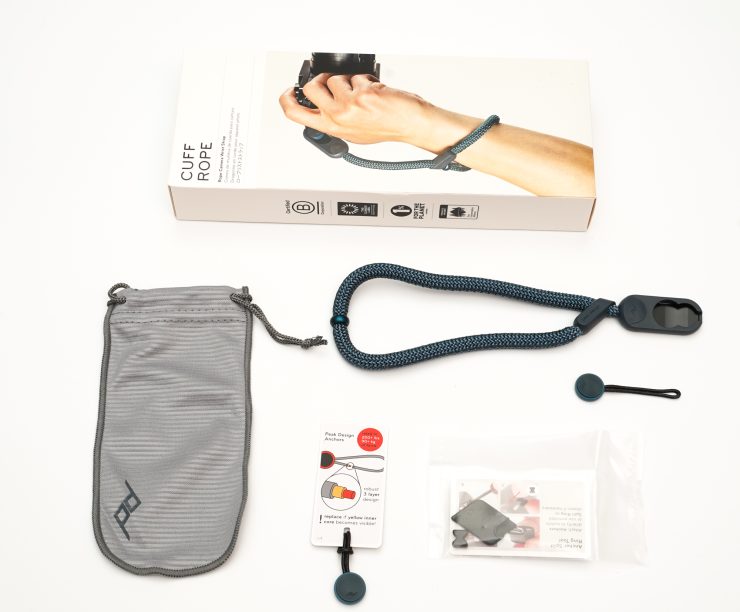
Form Cuff ships with two Anchors, split rings and a pouch.
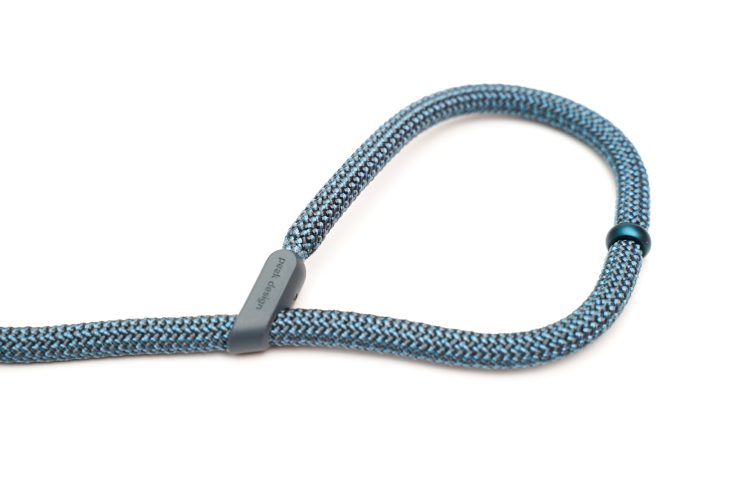
Just like the original Cuff from the Slide line, the Rope Cuff is a loop connecting to the camera by a single Anchor Link. The loop is closed by a diagonal plastic piece which slides along the rope to cinch it around the wrist.
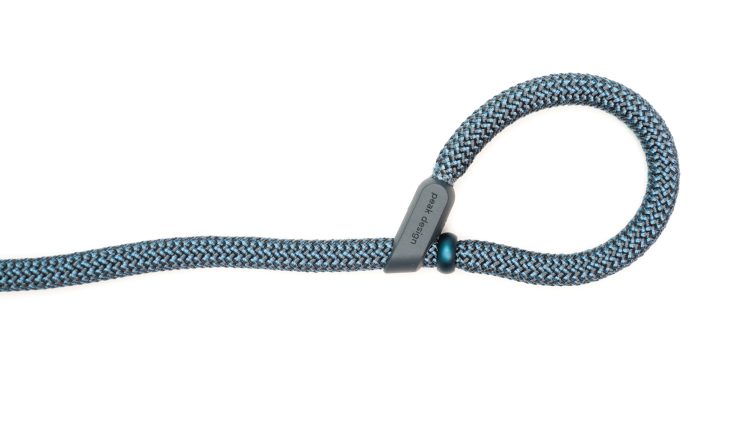
A bumper prevents the loop from getting too small.
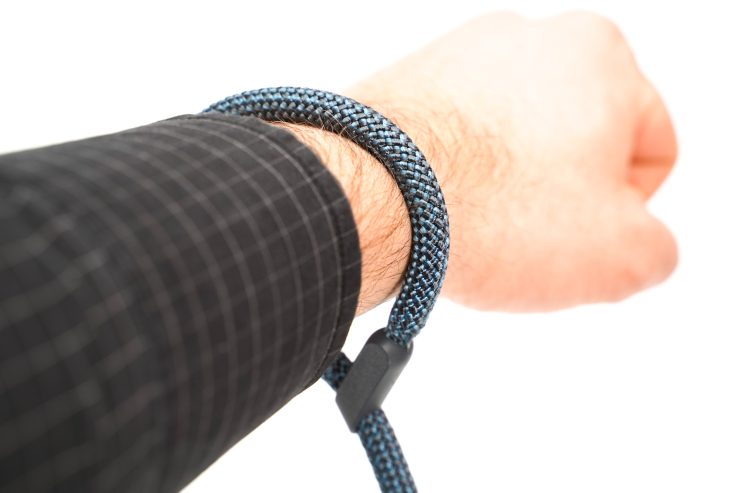
The strap can be worn cinched or left open. In the latter case, if the camera is ever dropped, the Cuff will automatically tighten when the camera pulls on it. Cinching it provides more security, while leaving it open makes it faster to remove.
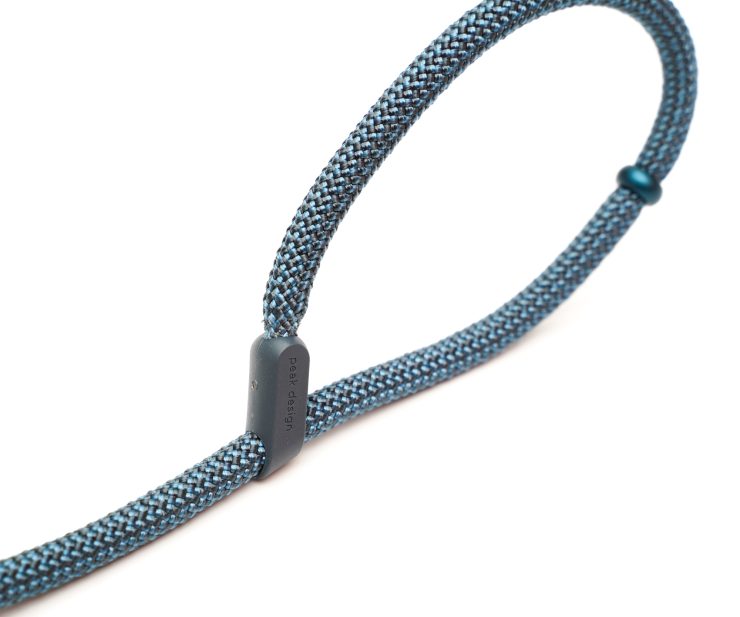
The material is supple but stiff enough to retain a mostly circular shape on its own, making it easy to slide the hand inside.
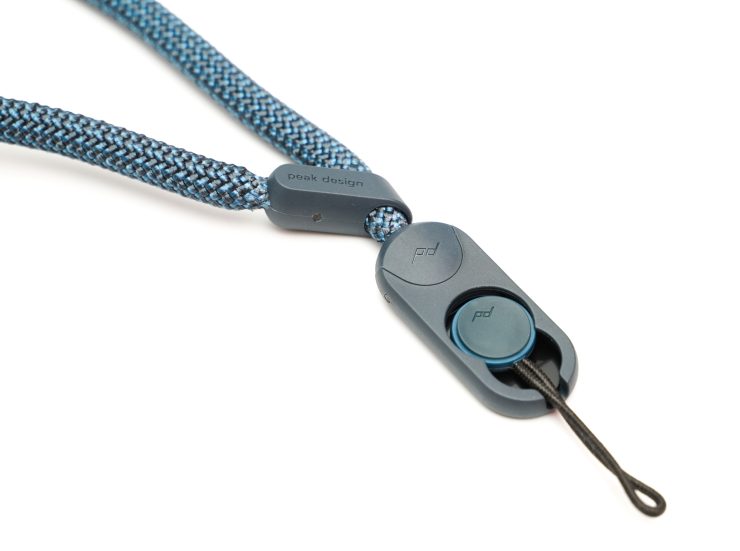
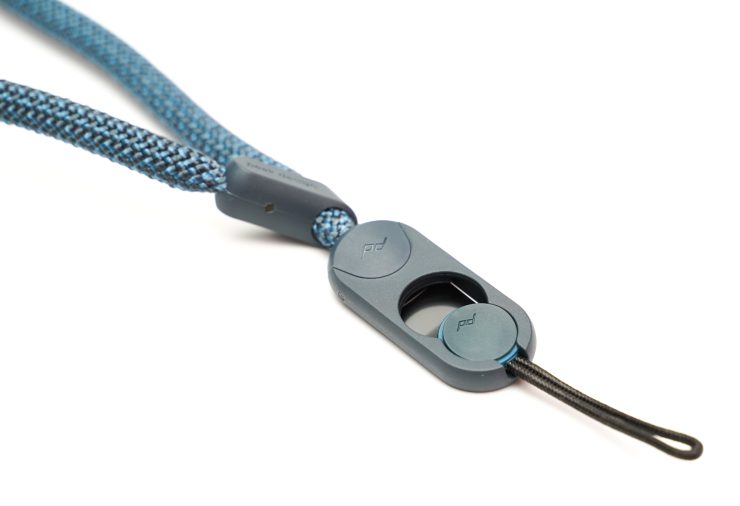
The Anchor Link is the same as on Form Leather: thin and a bit fiddly to use when compared with previous versions. It is color-matched to the rope, blue in this case. The supplied Anchors are also blue.
Form Rope is probably the most notable departure from Peak Design’s history in some time. The type of material, the shape and colors are different and noticeable. This type of strap is popular on the market, and it’s nice to see Peak Design join their signature features and quality to this type of material. The thick rope is comfortable even after wearing it for a long time.
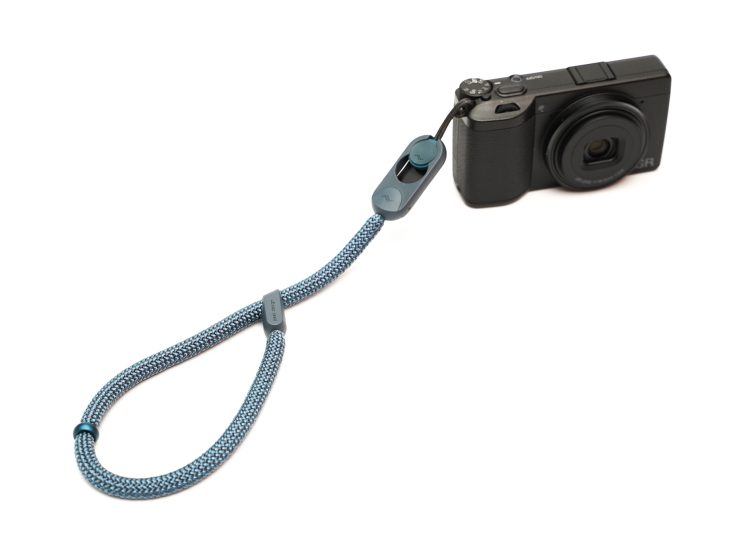
It is also deceptively thick: it looks huge next to a compact camera such as the Ricoh GR IV.
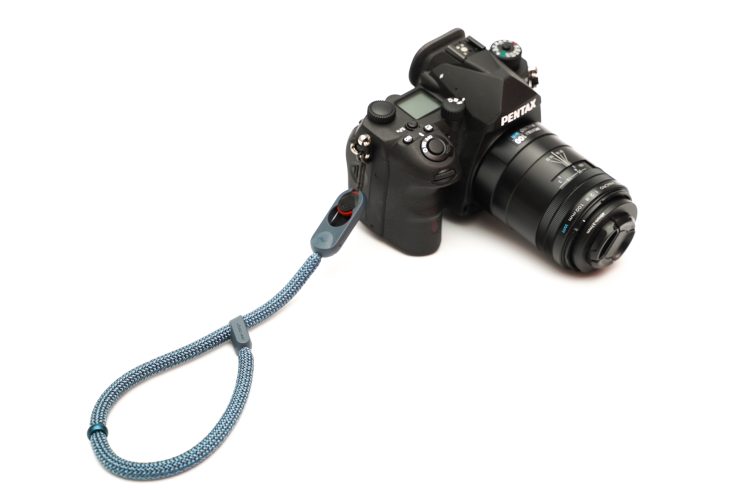
Despite having only one attachment point, it’s perfectly capable of supporting a larger DSLR.
Field Plate

The traditional Peak Design tripod plate has many qualities. It is extremely thin, four-sided, and has holes in each corner to attach a camera strap or Anchor. It also stays solidly in place. I have one on each of my cameras and large lenses and leave then in place at all times. They have served me well for many years.
The plate’s main disadvantage is the requirement of a hex key for mounting. By omitting the typical coin slot or flip-lever, Peak Design achieved an impressively thin profile, but at a cost to convenience. This is a non-issue for those who never remove their plates, but it is a notable hassle for anyone needing frequent battery access on smaller camera bodies or just want to remove their plate often.
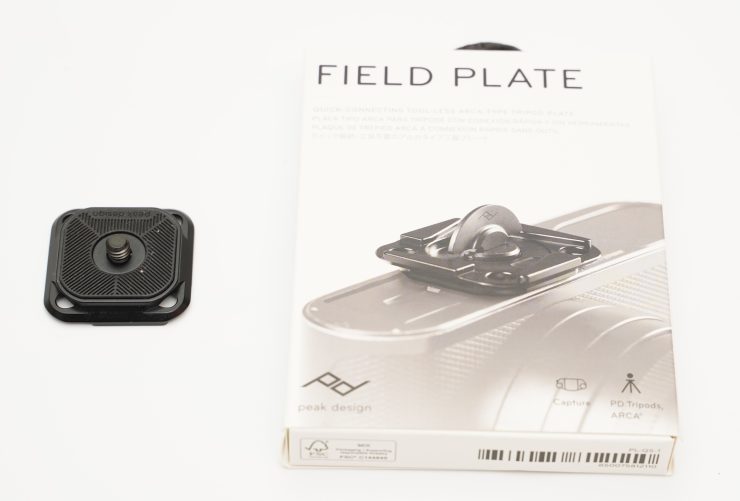
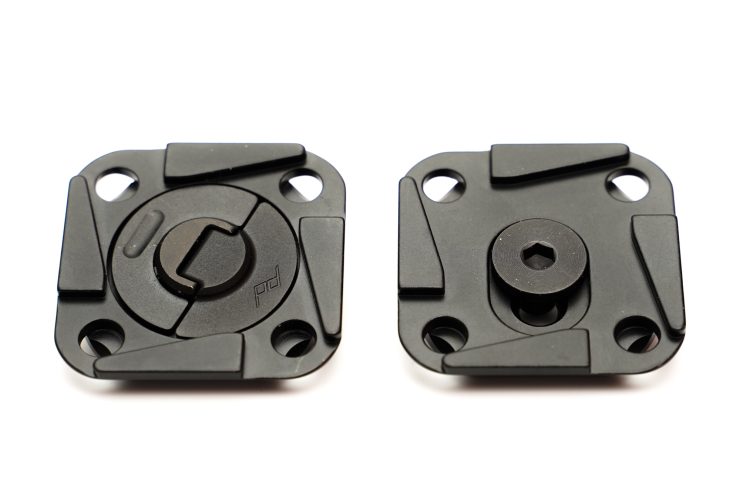
To address this, Peak Design released the Field Plate. It has the same exact dimensions and looks as the regular plate but does not require any tool to attach.
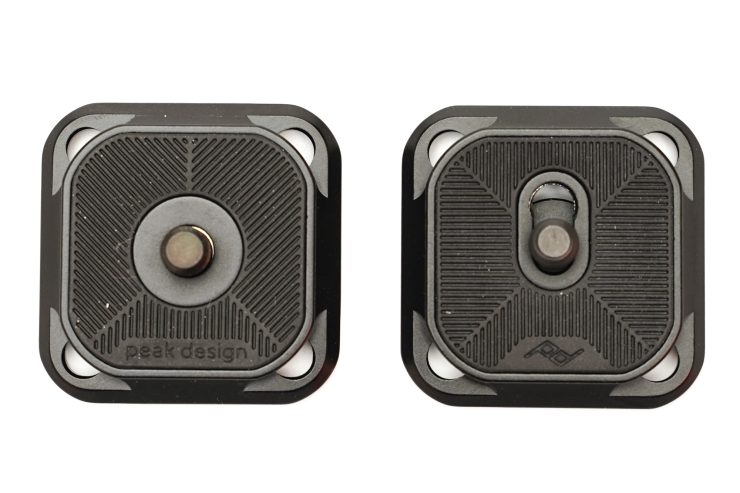
In typical Peak Design fashion, the solution can appear over-engineered at first but truly works.
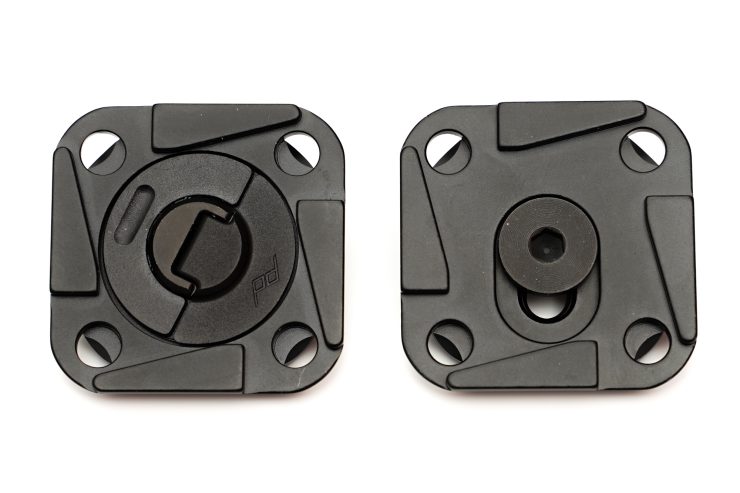
A split disk under the plate can be pressed on one side (the one with an indent) which pops up the spring-loaded other side. It can be used to tighten the screw then pushed back down. The surface is wide enough to provide a good grip. It is also much more pleasant to handle than the typical flip-lever.
There are two small drawbacks with this design. First, the plate cannot be tightened with a tool. This ensures that the profile remains as slim as before but the maximum force applied is inevitably lower. Second, the screw remains centered on the plate; it cannot slide to adjust the position of the plate on the camera. These two drawbacks are design choices and probably won’t bother anyone wishing for a plate that’s easy to remove.
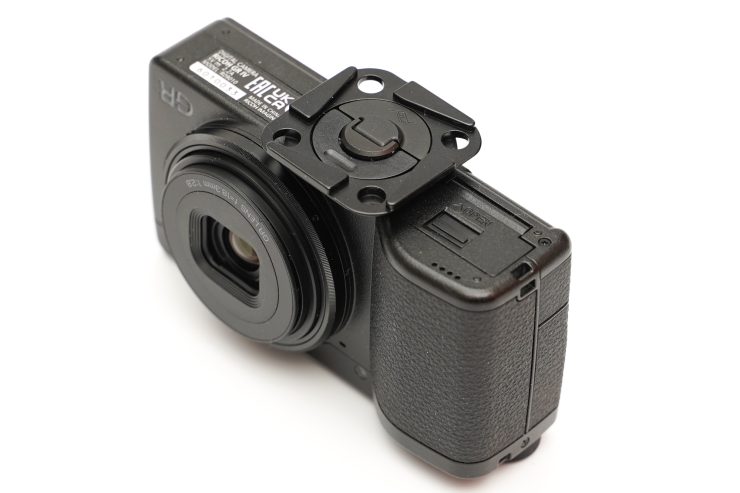
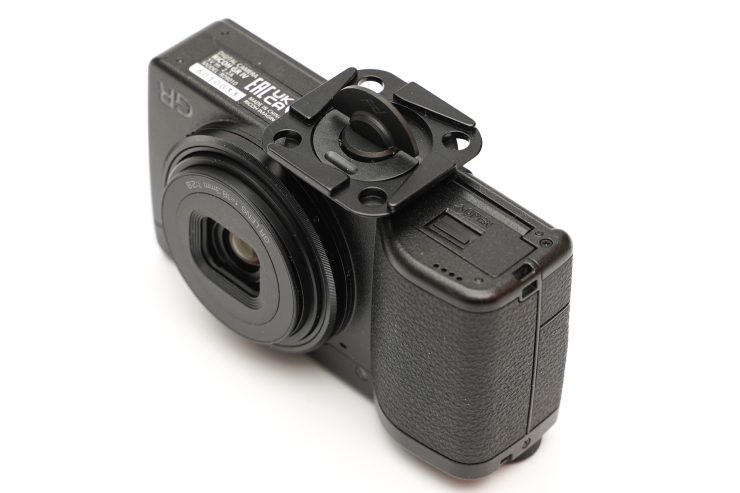
I was surprised with how easy it was to use the Field Plate. When using the Ricoh GR IV, I was constantly mounting and removing the plate. Not needing to use a tool truly made a difference. For heavier cameras and lenses, I prefer the regular plates which let me tighten them with a tool, but I wonder if the Field Plate shouldn’t become the default plate on most Peak Design products.
Pricing
Peak Design products are never cheap. Form Leather is $79.95 for Short, Standard and Long ($69.95 for Neck and Cuff). It is possible to find much cheaper options, but those will lack the Anchor Links and option to loop the strap on itself. Cheaper straps will typically use lower-grade leather, obviously. High-quality straps typically sell for prices comparable to that of Form Leather. For instance, the ONA Sevilla sells for $69 and Leica’s Leather Carrying strap goes for $120. Both require permanent attachment to the camera, except if Peak Design Anchor Links are added to the straps. Of course, there are also plenty of inexpensive straps, like those made by Coiro, that use a connector system that is clearly derived from Peak Design’s: their Classic Leather strap is about $35.00.
Form Rope is cheaper, at $49.95 for Short, Standard and Long ($44.95 for Neck and Cuff). Other options include the COOPH Rope at $68 while Sailor Strap Skinny Jimmy sells for $54.95. Standard rope straps, without Peak Design’s connectors, cost around $10, though, like this one from K&F.
The Field Plate costs $39.95. Even though basic tripod plates can be had for a few dollars, there are few direct competitors for the Field Plate on the market. Arca-Swiss’s Square Quick Release Plate is thicker, requires a tool, and costs $101.40. Three Legged Thing proposes the square QR4-Octa at $19.99. It also requires a tool and is thicker, but there are plenty of inexpensive plates on the market with D-rings on the screw for just a few dollars each, like the Neewer at $17 for two.
Conclusion
The more a company expands its product line-up, the more it runs the risk of diluting what defines it. This is a fine line to thread. Peak Design started as a photo accessory company making first the Capture Clip, then straps and camera bags. It then expanded into the travel luggage business. Throughout this growth, the company never stopped thinking about photography. The two new Form lines and the Field Plate are examples of this. Instead of breaking completely new grounds, these products are a direct response to customer requests and wishes.
The Field Plate is probably the most direct example of this. Tripod plates are easy to dismiss as near-consumables, but a well-made, easy to use plate makes many things easier. The spring-loaded mechanism to release the lever is deceptively simple but works perfectly.
Form Rope does exactly what it’s supposed to. It’s moderately priced, comfortable and easy to use. Form Leather adds a touch of elegance and class with supple, durable and high-quality leather. Both types of straps loose the length adjustment capabilities of the Slide Straps, but that’s a compromise many will be willing to make. I must mention that, from my point of view, the new Anchor Links are not as easy to use as the former versions, but otherwise there is little to criticize with these new products by Peak Design.
Peak Design’s products, including these, can be purchased from B&H Photo and many of your favorite local camera stores, along with their own website and their Amazon storefront, of course.