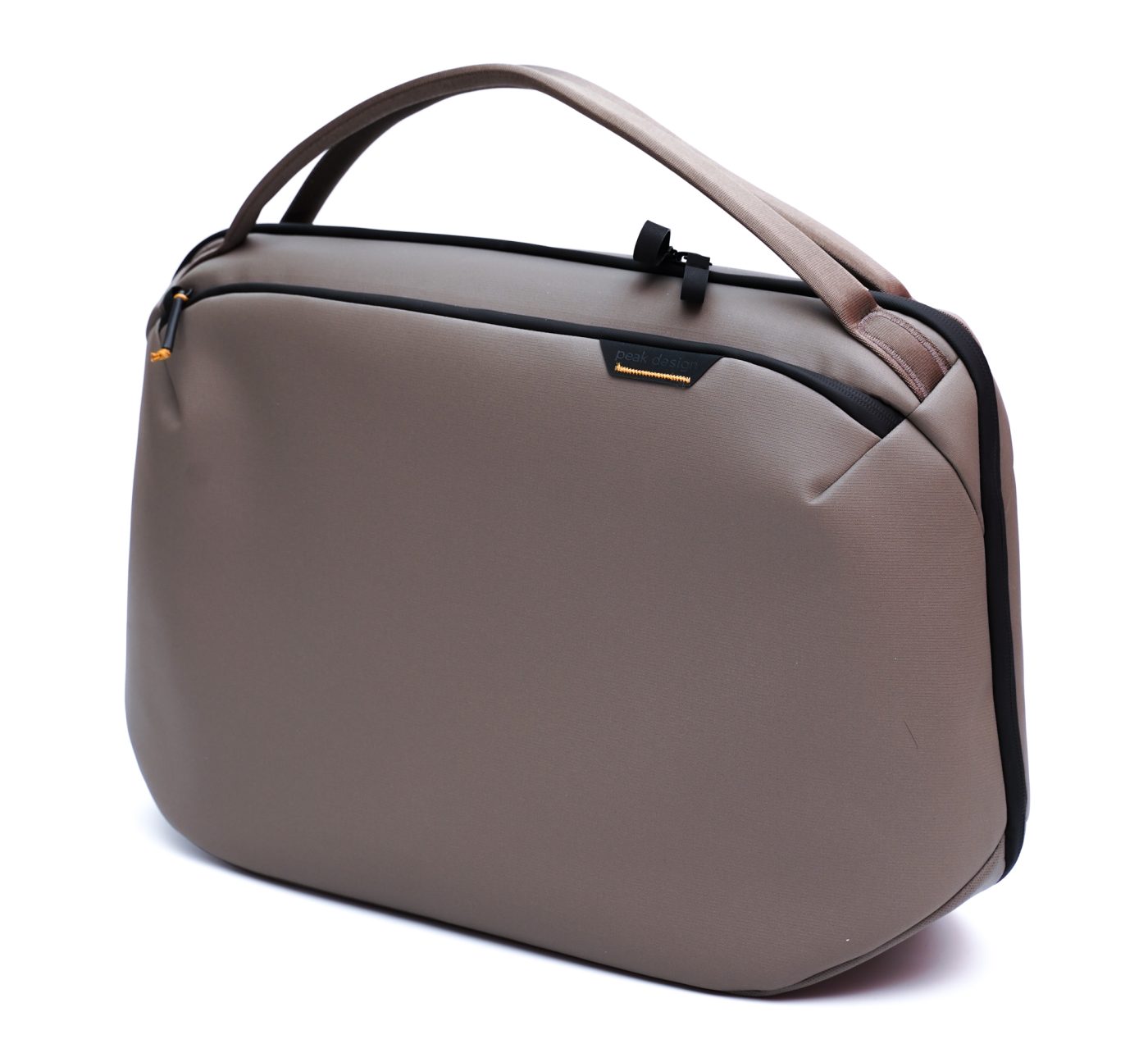
Peak Design is launching their 16th Kickstarter campaign on March 3rd, 2026, and I had the chance to test one of their new products before launch. Here is my experience with a pre-production Weekender 25 duffle/suitcase. (Check out the Kickstarter here).
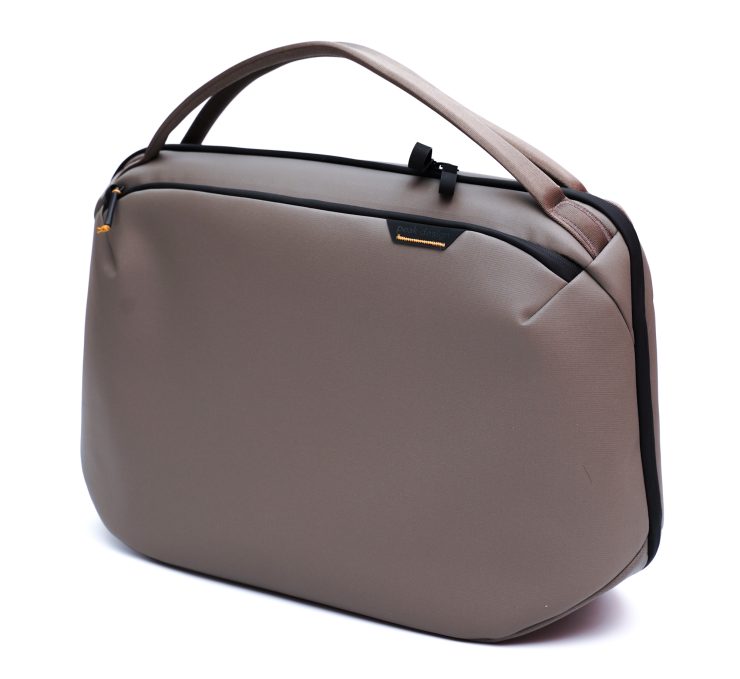
Peak Design started with a single product but now proposes a varied range of equipment for photographers and travelers. Their Travel Line also caters to photographers, with solid integration of the company’s camera cubes in their bags. Still, when compared with their line of camera bags, the Travel Line was more barebones. This is changing with the introduction of a 20L Travel Backpack, a 2-in-1 50L total Travel Backpack, a 3L crossbody sling and the 25L Weekender I am discussing today.
Physical Description
(Remember that I am testing a pre-production model. Some details could change for the final version.)
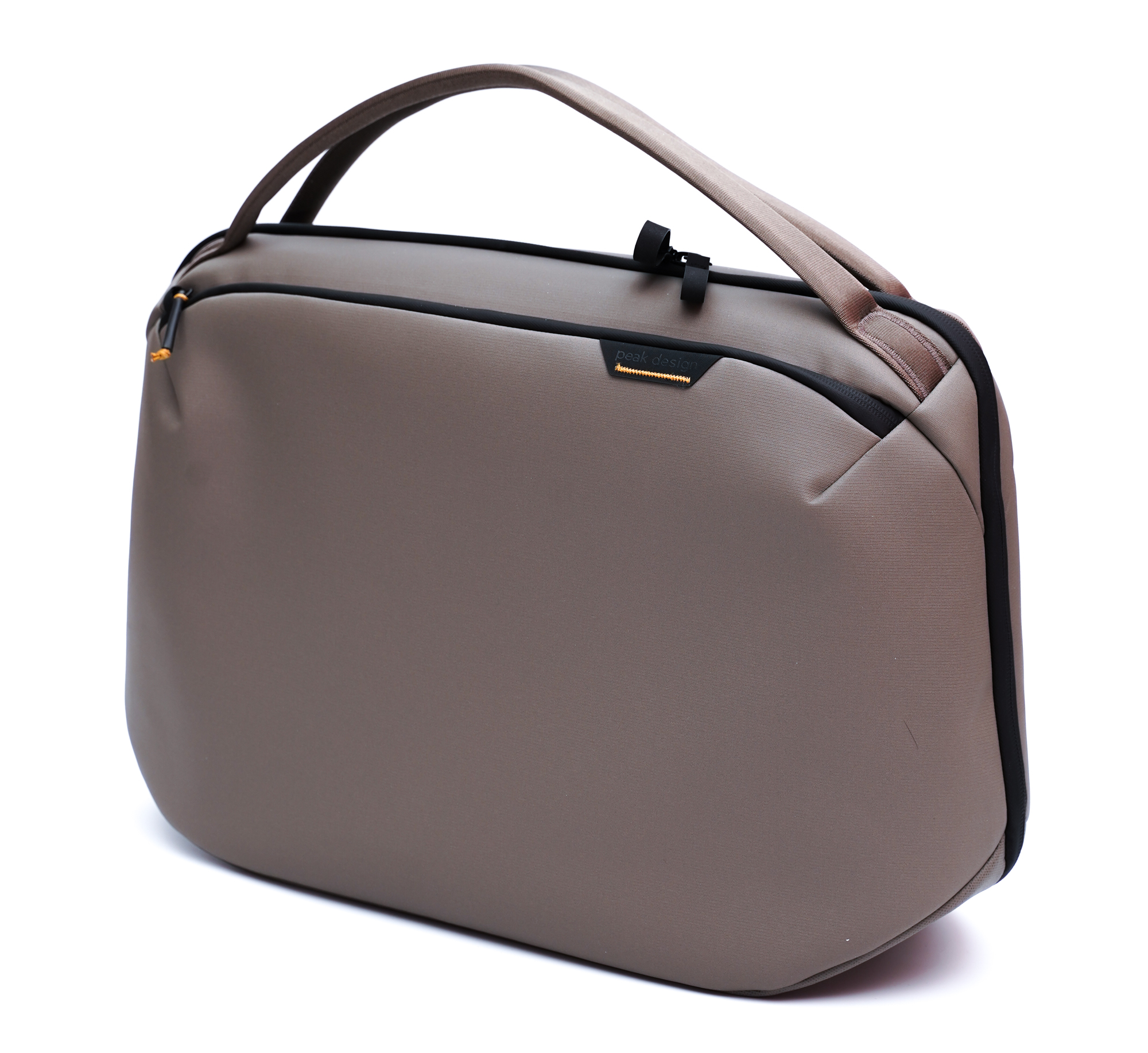
The Weekender is available in three colors, Black, Sage and a new Stone (grayish) color. I am testing the Stone version. The color changes with illumination: truly gray under sunlight, gaining a brownish tint under fluorescent tubes.
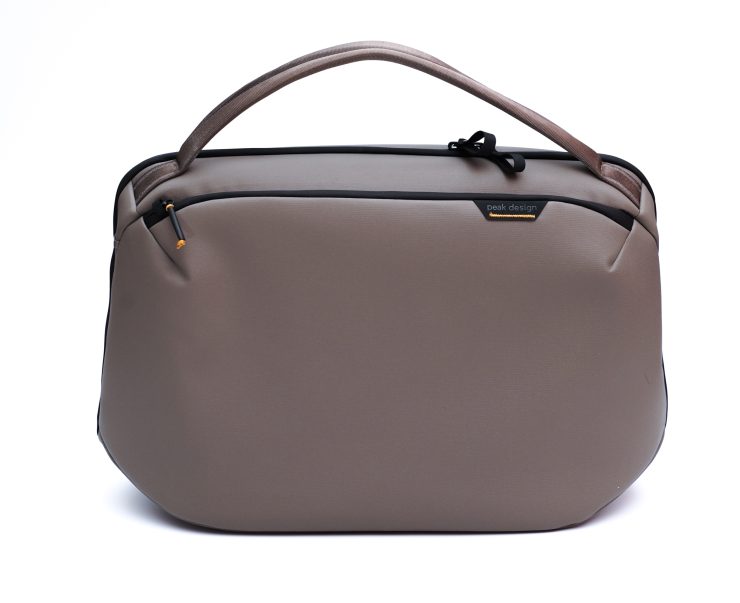
The bag is made of the same Versa Shell fabric as the company’s Roller Pro suitcase. Indeed, it was designed primarily as a match for the Roller Pro. Versa Shell is durable, weather resistant, easy to clean and has held up well under heavy use in my experience.
Peak Design calls the Weekender a duffle, but I argue that it also looks like a beefed-up laptop bag or briefcase. It stands upright on its own and has two (very) comfortable, padded handles which also stay upright to grab easily. The shell is not hard like the Roller Pro. Zippers are a contrasted black, with a few yellow accents on zipper pulls and near the company logo. The overall look is elegant and certainly not flashy.
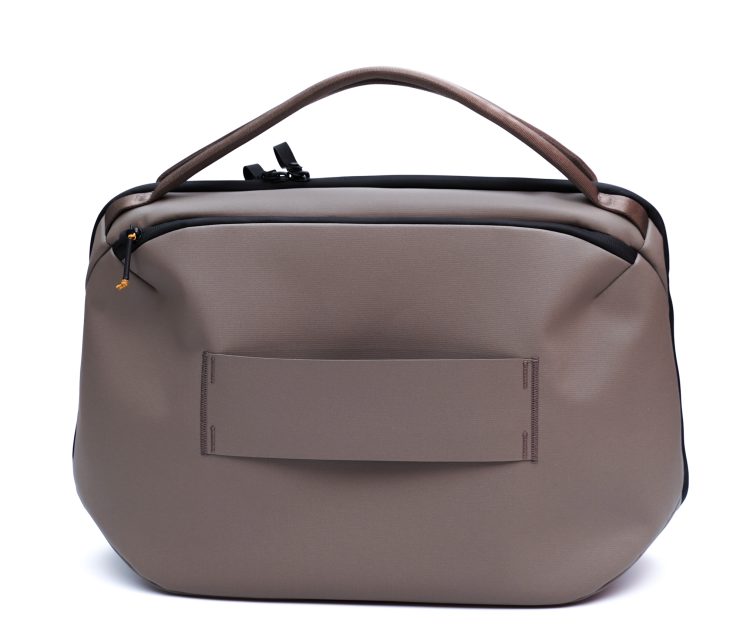
One side features a wide luggage pass-through panel.
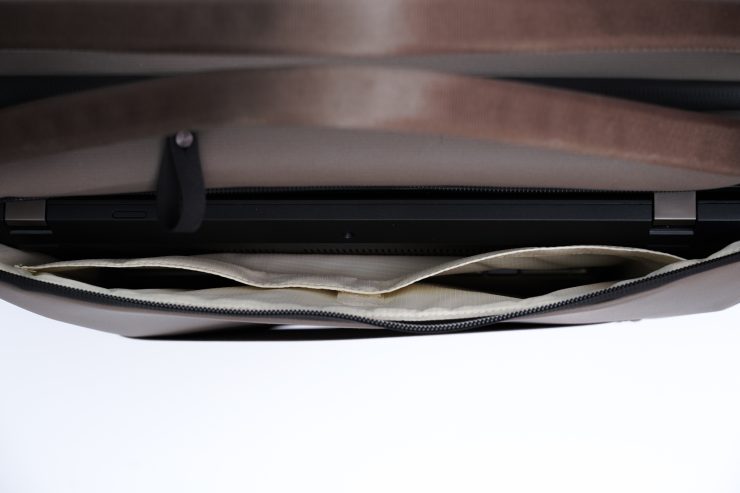
There are two external pockets. One serves as a laptop-tablet compartment, with a Velcro patch closing the smaller tablet section. There is a decent level of padding to protect electronics. The laptop is also protected by a false bottom.
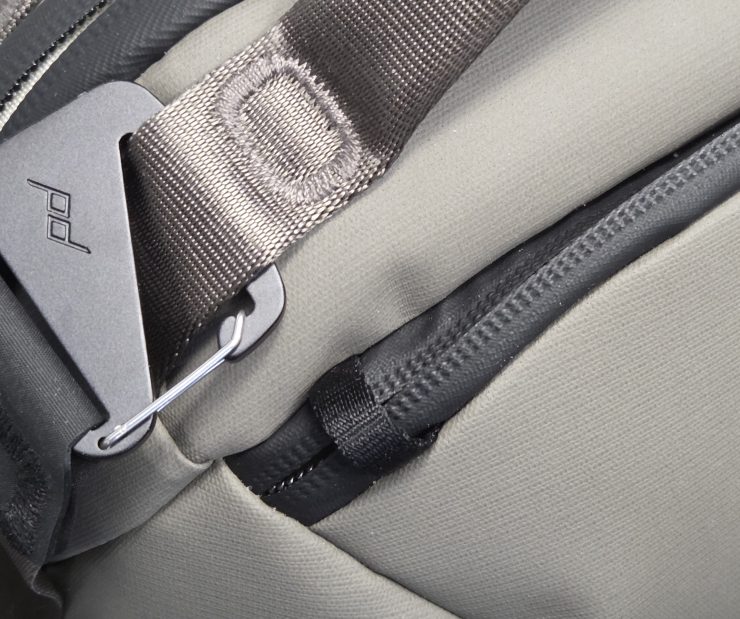
The laptop compartment is supposed to support 16 inches laptops. My work computer is a 15.6 inches Lenovo Thinkpad P15v. Getting it in and out is a tight fit because of the shape of the opening, particularly the small loop shown above. I notified Peak Design of this, maybe it will be adjusted for production versions.
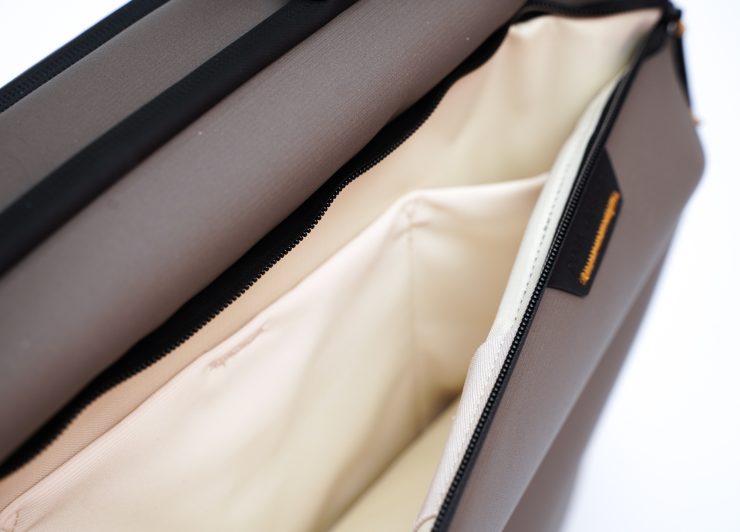
The second external compartment features a key clip (missing on my pre-production version), three internal pockets along with a pen holder. This compartment has a depth of approximately half the height of the Weekender.
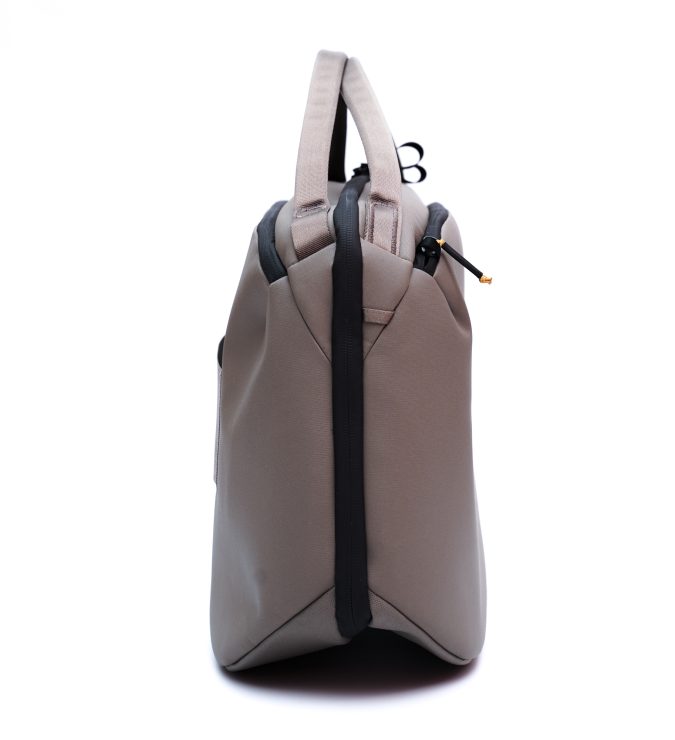
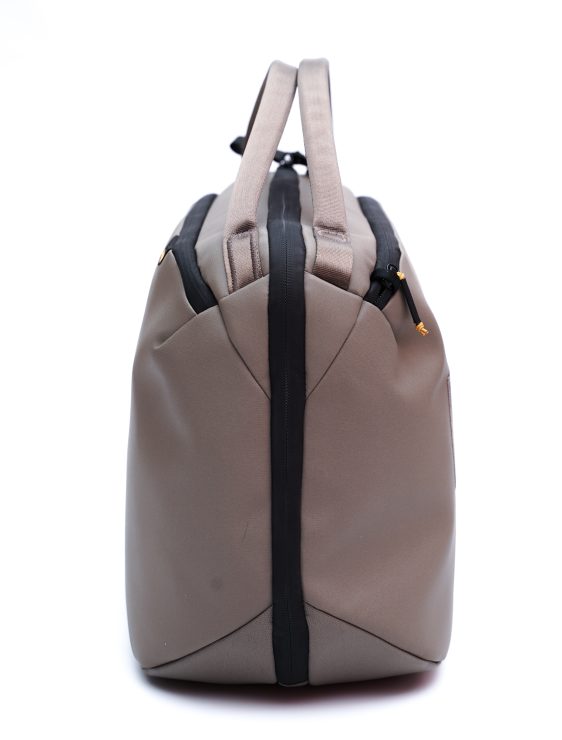
The bottom of the Weekender folds inwards in the middle to keep the profile slimmer when the bag isn’t full. This is useful for storage or to fit the bag under an airplane seat. Pushing down on the bottom widens the bag quite a lot, allowing it to reach its maximum 25L volume.
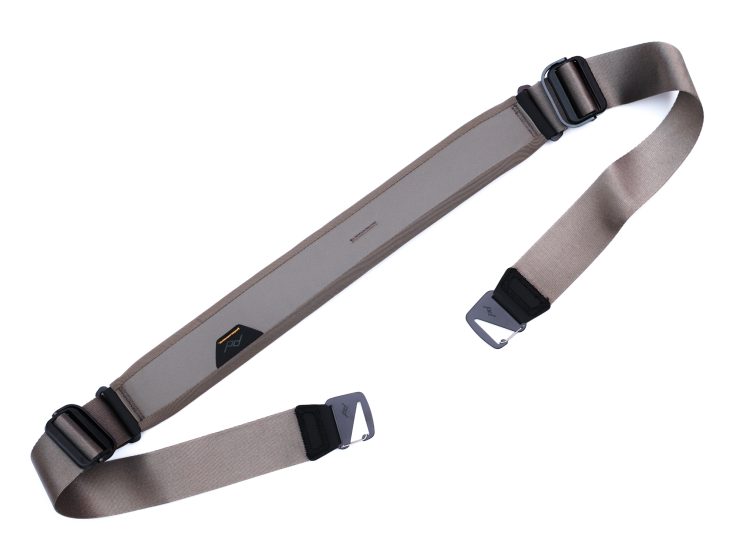
A removable shoulder strap attaches to the ends of the handles. It is similar to straps found on the company’s Sling and Messenger bag: seatbelt fabric, center padding and the Slide length adjustment. Like the Slide straps, it has a length adjuster on each end.
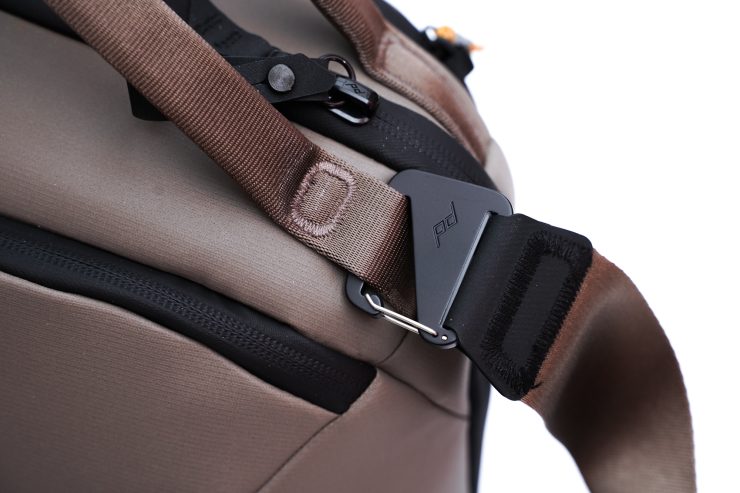
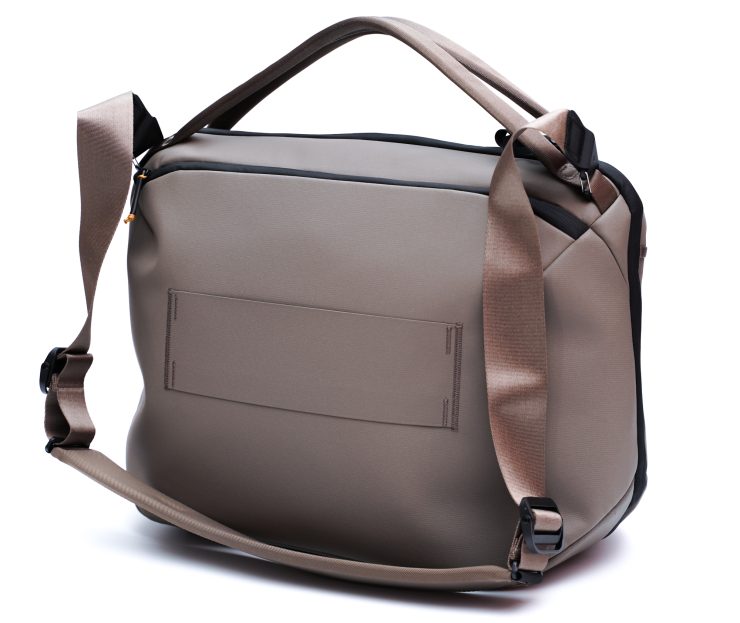
The strap is larger, and more thickly padded, than a camera bag’s strap. Worn over the shoulder, the strap feels comfortable for short and medium periods of time, as long as the bag isn’t completely full. The length of the strap makes it harder, but not impossible, to wear it cross-body.
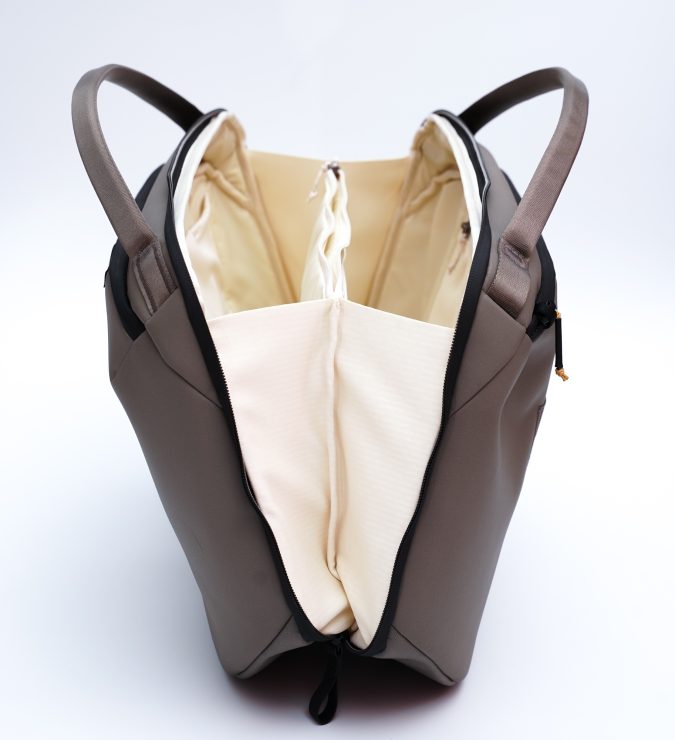
The main compartment unzips via a large clamshell opening reminiscent of the company’s Tech Pouch. The zippers can be looped together to deter theft (as is common with other Peak Design bags).
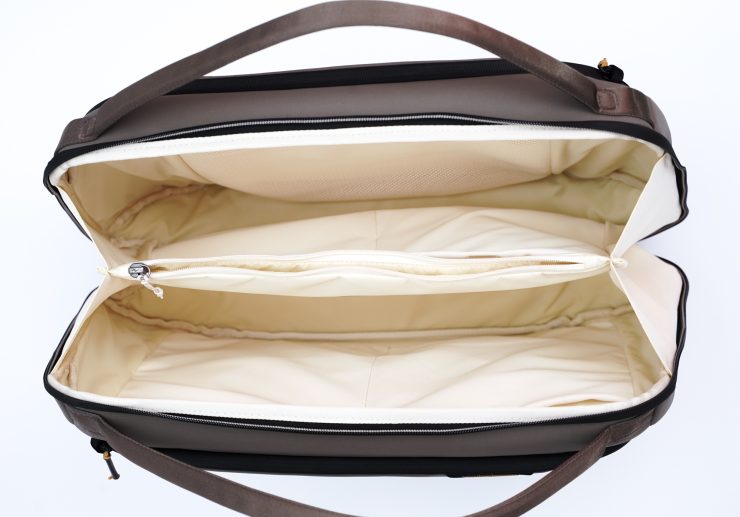
The internals use a pale color, making it easy to see inside. This color is new for Peak Design. I personally like that it improves visibility, but I’m not a huge fan of this particular shade.
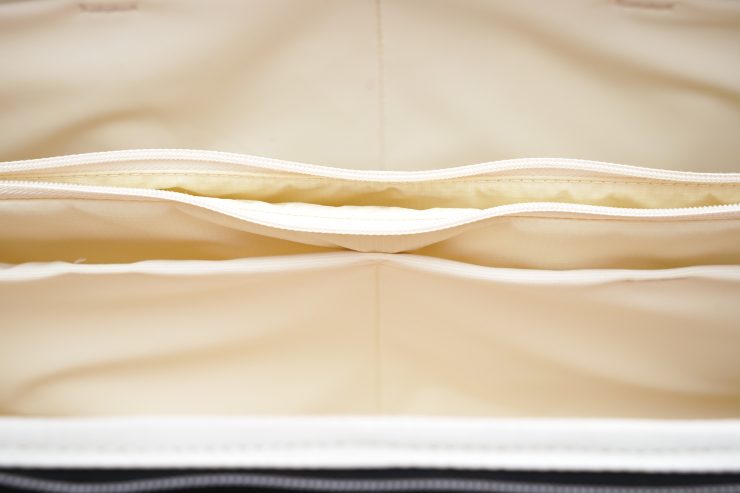
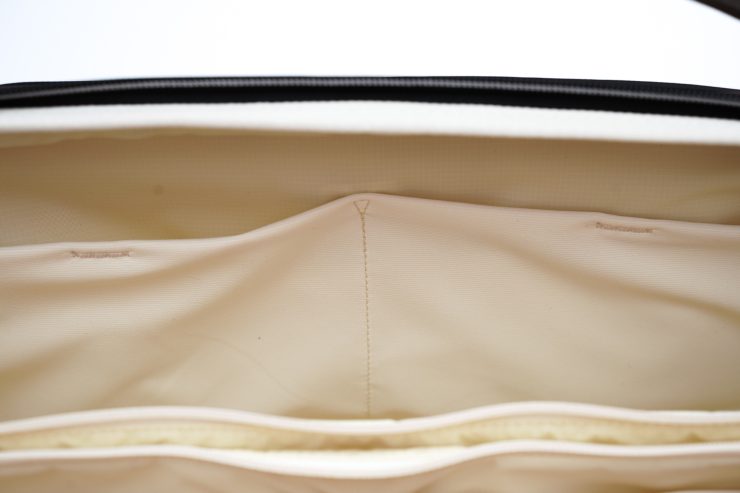
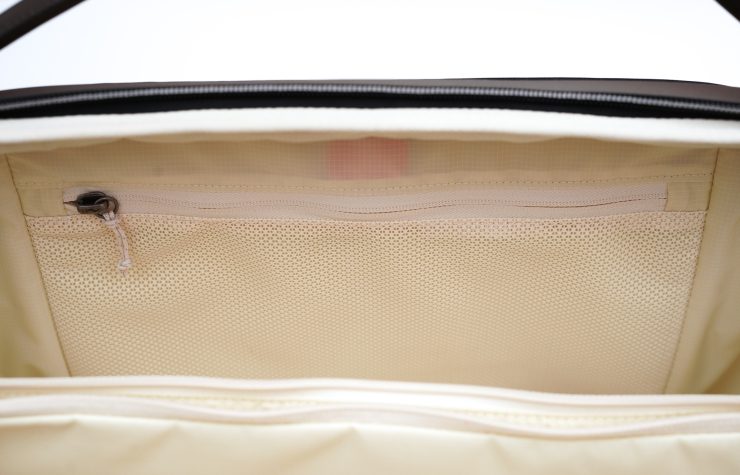
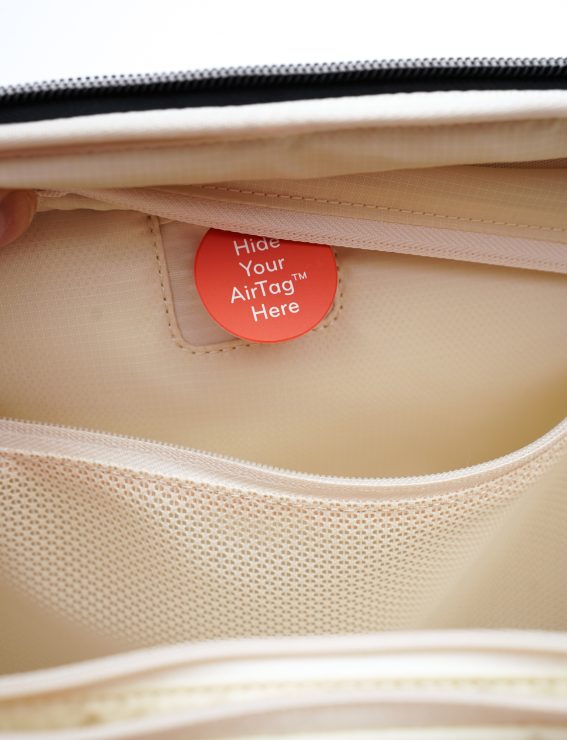
Peak Design Weekender 25L internal storage
The insides feature a center separator with a zippered top, creating a medium-size pocket. It offers some minimal padding. Two stretch pockets are located on one side of this separator. One external side has two wide and deep stretch pockets, and the other side features a zippered mesh compartment hiding a locator tag mini-pocket. In other words, there is no lack of options for internal organization.
In Use
It is easy to assume that the Weekender is only a briefcase. That’s because the bottom is not flat by default and the bag appears narrower than it truly is. Push down on the bottom or simply fill it with stuff, and it expands greatly, making it obvious that the Weekender is truly multi-purposes.
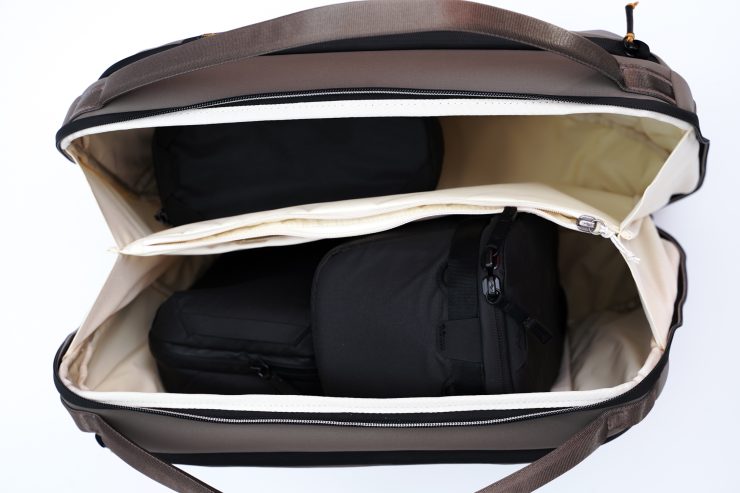
I tested the Weekender with a variety of camera and packing cubes and it surprised me. It is an excellent fit for Peak Design’s XSmall, Small and SMedium camera cubes, with room to spare. I was able to fit a Small camera cube on one side along with a Tech Pouch, and an XSmall camera cube on the other side, with a lot of room for other things.
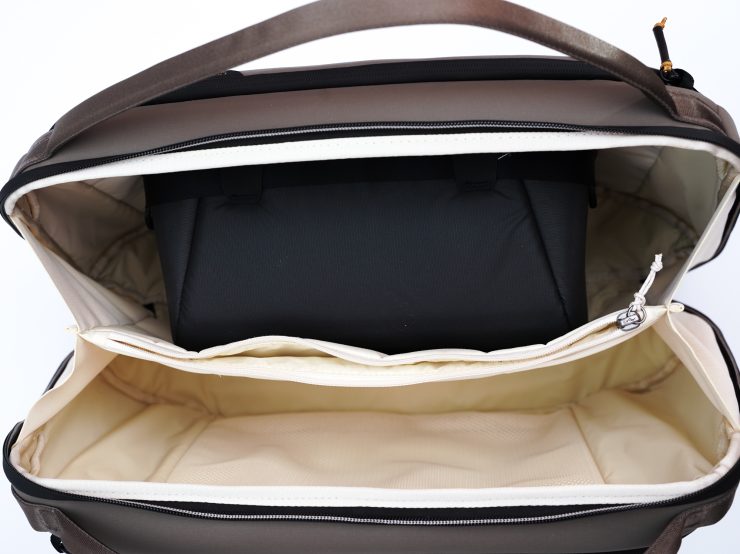
It is also possible to fit an SMedium camera cube, again with room to spare. In that case however, the central divider pushes towards the other side; fitting another camera cube won’t be easy. A Medium cube would probably fit, but barely. A lot of clothes or other items would easily fit alongside the SMedium cube, however.
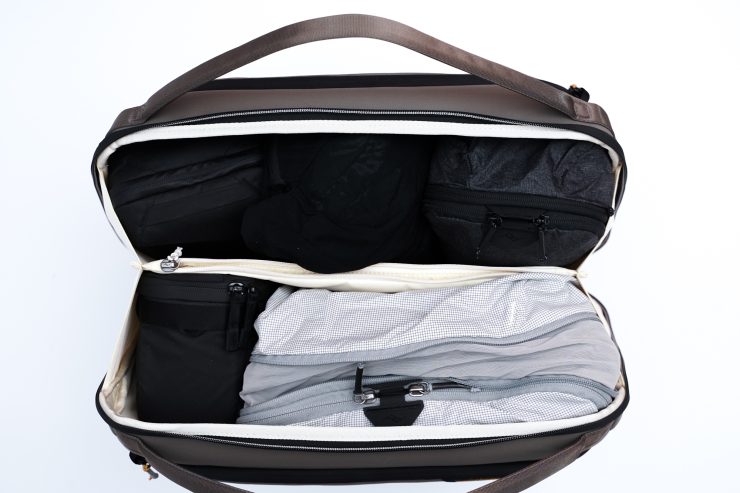
When used purely as a travel bag, I had no problem fitting a lot inside: a medium and two small packing cubes, a tech pouch and an XSmall camera cube. The shape of the zippers and the way the Weekender closes let me easily compress clothes and get everything to fit.
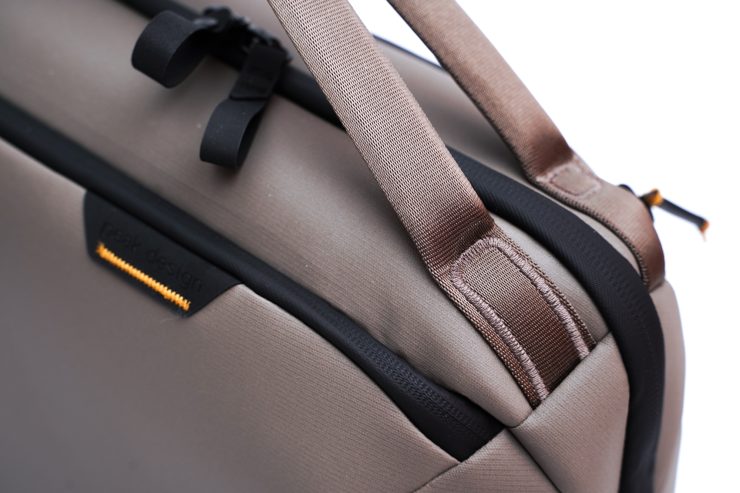
Carrying a 25L bag filled to the brink over one shoulder is not the most comfortable for long time stretches. That’s not a flaw of the Weekender, just a reality that weight must be distributed. Pairing the (full) Weekender with the Roller Pro is an ideal match as the Weekender fits nicely over the suitcase’s handle.
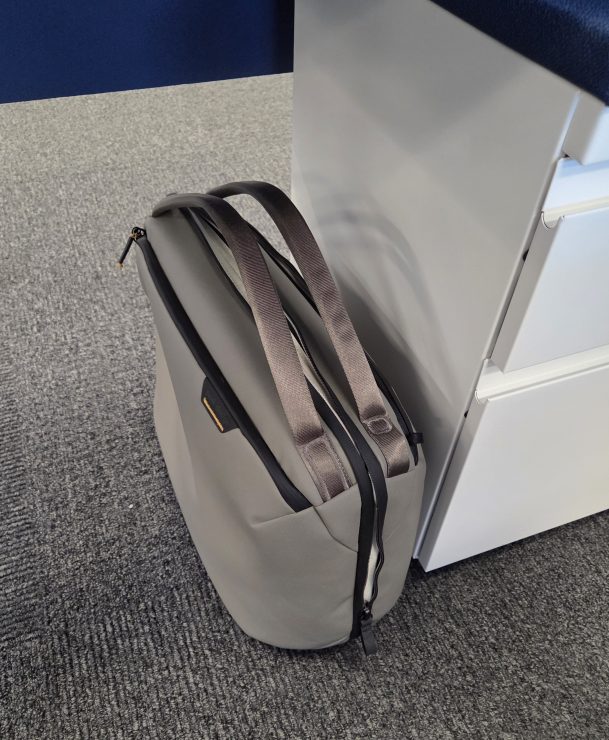
With the bag partially filled, however, I had no problem using it daily to get to the office or leave home for an overnight trip.
As a photographer, the Weekender makes more sense than I expected. This is not a bag meant to be used when shooting; it does not offer particularly quick access to photo gear (except with XSmall and Small cubes, which can be placed with their opening facing up). Rather, it offers a compact, one-bag option to carry both photo gear, clothes and toiletries all together. When on location, I either carried my camera in my hand, or used a camera cube as a temporary camera bag, sometimes with one of Peak Design’s straps, or directly with the Weekender’s strap attached to the camera cube.
Another thing I found myself doing is using the Roller Pro to carry photo gear, and the Weekender as a supplementary storage for clothes. The two work together very well.
It is not necessary to use packing cubes with the Weekender, but it made it much simpler to pack. Despite having a design less straightforward than a typical duffle or suitcase, it’s surprisingly easy to pack the Weekender. The upright, clamshell design is truly useful, and the bag does not topple even when carrying only a laptop on one side. The bag offers roughly three of Peak Design’s “packing units” (a small case takes up one unit and a medium uses two).
Summary
I enjoyed my time with the Weekender 25L bag from Peak Design. It’s an uncommon bag for the company, in that it does not put photography at the forefront as the Everyday and other Travel bags do. Still, it fills a niche in the lineup. I particularly liked it as a sidekick to the Roller Pro and as a laptop bag (despite the tight fit of my work computer).
The Weekender is surprisingly versatile. Even though its shape is not standard as far as travel bags go, there are many benefits to it. It takes up less space while standing up, a benefit in small hotel rooms; it fits under airplane seats; it can be worn cross-body; it’s easier to carry in hand than a backpack.
The fabric and craftsmanship are as good as other Peak Design bags. Moderately priced at $200 (with a significant KickStarter discount), the Weekender is more affordable than some other bags from Peak Design.
[Editor’s Note: As always, this review is not sponsored, though the bag was provided for review. Peak Review had no input or editorial oversight, and we will receive no commission from Peak Design. Our reviews are always as unbiased and honest as possible. Links to Amazon and other retailers, however, are generally affiliate links.]
- High quality materials and craftsmanship, weather resistant, lifetime warranty
- Sufficient volume and adaptable size
- Advantage Sample 3
- Excellent companion to Roller Pro or other carry-on suitcases
- Comfortable handles and strap
- Modular interior organization
- Fairly priced
- Fair-trade certified and carbon neutral
- Larger laptops are a tight fit
- No quick access to camera equipment, more useful to carry on location
- 25L is a large volume to carry on one shoulder when completely loaded
I enjoyed my time with the Weekender 25L bag from Peak Design. It’s an uncommon bag for the company, in that it does not put photography at the forefront as the Everyday and other Travel bags do. Still, it fills a niche in the lineup. I particularly liked it as a sidekick to the Roller Pro and as a laptop bag (despite the tight fit of my work computer).