T3i vs T2i ?
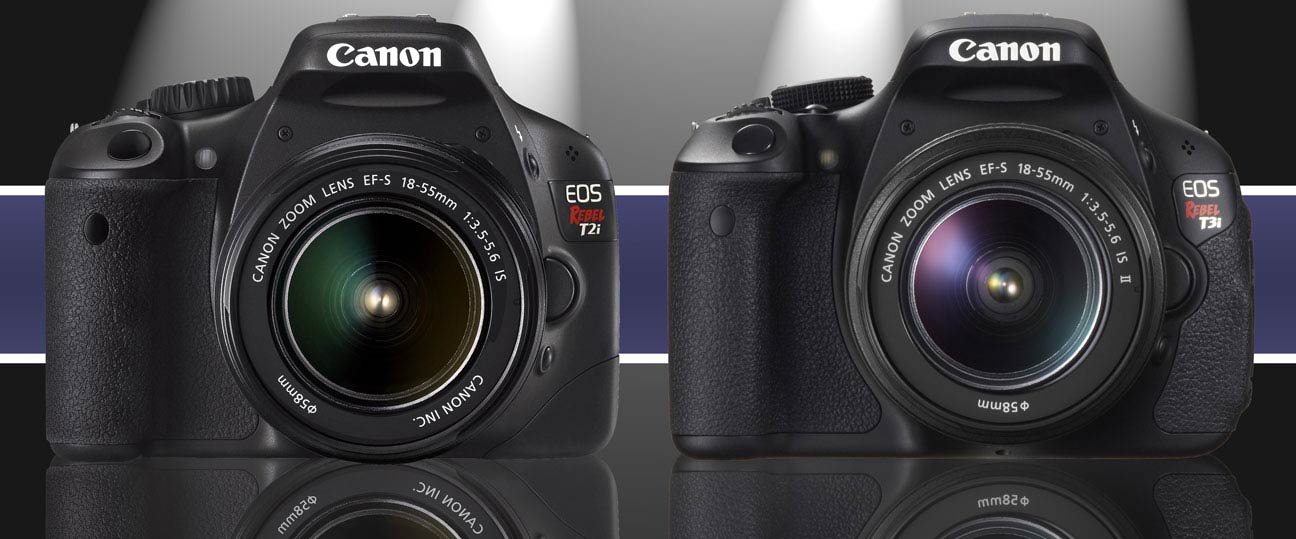
The Canon Rebel T3i is already on store shelves, even though the Canon T2i was announced just a year ago. Not surprisingly, the technological differences between the two are minimal, at least at first glance: they use the same sensor, image processor, and autofocus system. Yet the T2i is still available, and at only $579 for the body, it is a tempting offering. But when comparing the T3i vs T2i, is the T3i worth the extra cost? For some people it will be; for others it will be a waste of money. Below, I’ll very briefly note the differences between the two cameras and explain who will benefit from the T3i and who will be just as happy with the T2i.
The Similarities
Before making a big deal about the differences, it’s worth noting that these two cameras are mostly identical when it comes to standard photographic operation, and there is no difference in RAW image quality between the two. The table below shows the functional similarities.
[To see the whole T2i vs T3i table, click in the drop down box which currently displays "10" and select "50"],
| Canon Rebel T3i / 600D | Canon Rebel T2i / 550D | |
|---|---|---|
![]() | ||
| Amazon Price (body) | $699 (Until Sept 3) | $639 |
| Body Material | Polycarbonate, Fiberglass Resin and Stainless Steel | Polycarbonate, Fiberglass Resin and Stainless Steel |
| LCD Size / Resolution | 3.0" 1,040,000 pixels | 3.0" 1,040,000 pixels |
| LCD Articulated? | Yes | No |
| Sensor Size | 14.9 x 22.3mm (APS-C) | 14.9 x 22.3mm (APS-C) |
| Crop Factor | 1.6x | 1.6x |
| Sensor Resolution | 18 Megapixels | 18 Megapixels |
| ISO Range | 100-6400 +12800 | 100-6400 +12800 |
| Total AF Focus Points | 9 | 9 |
| Cross-Type AF Sensors | 1 | 1 |
| AF Light Level Range | -.05 to +18 EV | -.05 to +18 EV |
| Metering System | 63 Zone Point Linked Evaluative 9% Center Weighted 4% Spot | 63 Zone Point Linked Evaluative 9% Center Weighted 4% Spot |
| Exposure Compensation | 1/2 or 1/3 stops | 1/2 or 1/3 stops |
| Max Frame Rate : RAW (14-bit) | 3.7 | 3.7 |
| Max Burst Duration RAW (at highest frame rate) | 6 | 6 |
| Max Burst Duration JPG (at highest frame rate) | 34 | 34 |
| Shutter Speed Range | 1/4000th - 30 sec. +bulb | 1/4000th - 30 sec. +bulb |
| Maximum Flash Sync Shutter Speed (standard flash) | 1/200th sec. | 1/200th sec. |
| HD Video Resolutions | 1080p, 720p | 1080p, 720p |
| Available HD Video Frame Rates | PAL and NTSC 24/25, 30 at 1080p 24/25, 30, 60 at 720p | PAL and NTSC 24/25, 30 at 1080p 24/25, 30, 60 at 720p |
| Media Type | SD / SDHC / SDXC | SD / SDHC / SDXC |
| Weight | 570g (including battery) | 530g (with battery and SD card) |
| Viewfinder Coverage | 95% 0.87x magnification | 95% 0.87x magnification |
| Built-In Wireless Strobe Control | Yes | No |
.
What’s New in the T3i?
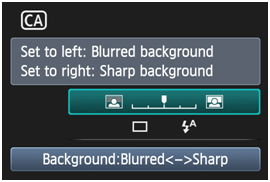
The two lines of text at the top of the LCD here represent the new "In-Camera Guide"
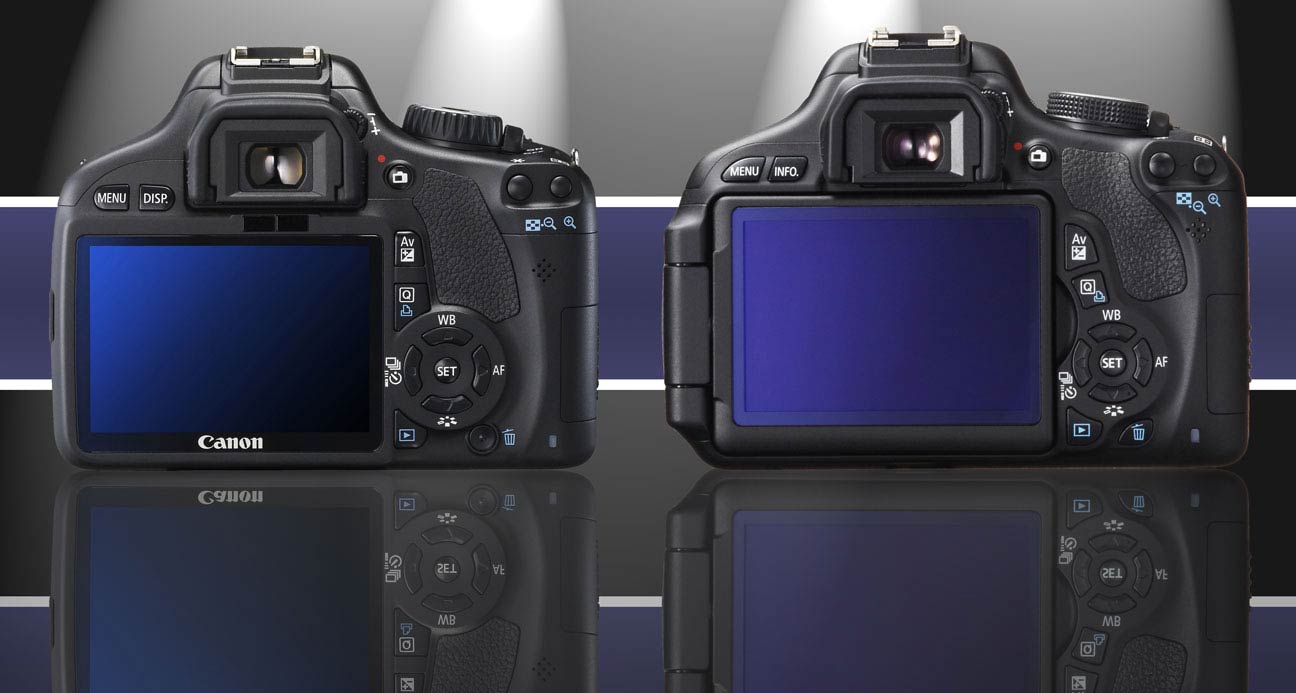
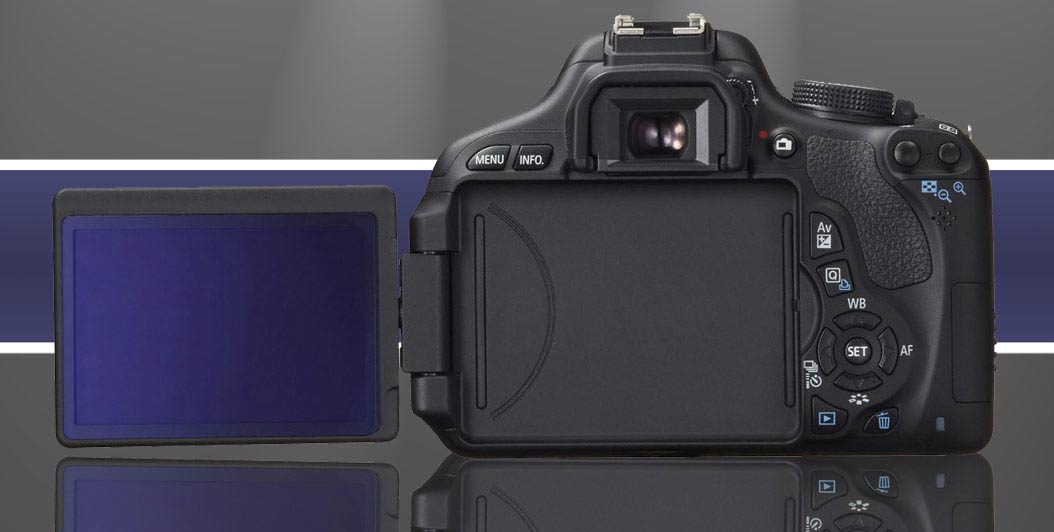
From the outside, the only major difference is the rear LCD. The new T3i sports an articulated LCD, much like that found on the Canon 60D. To accommodate the new LCD, the body is slightly deeper, and the whole unit weighs a hair more. Canon has also made some minor ergonomic changes, such as adding additional rubberized padding to bottom of the front left side of the body for extra comfort and protection.
Internally, there are a few more significant differences, though. These include:
- Native wireless control of off-camera flash (T2i requires accessory Canon ST-E2 module)
- Digital zoom for 1080p video, while recording. (Since 1080p video is only 2 megapixels, this can crop down to the center of the sensor, effectively providing a 3x – 10x zoom)
- Cropping mats for shooting in different aspect ratios
- “Video Snapshots”, which are short video clips assembled in-camera into an extended video
- In-Camera Guide, which provides information on the LCD panel that makes choosing alternative settings a little easier for beginners
- An image-database driven full-auto mode (A+) and some additional in-camera processing options, the “Creative Filters”.
Who Should Buy the T2i?
If you have used a 35mm film camera in the past and are simply looking to get a digital camera to do the same things, the T2i is probably for you. It’s no accident that this has been the best selling SLR in the world for much of the past year. The new video features in the T3i won’t be of use if you’re only interested in taking photos, and the auto settings and In-Camera Guide will not be relevant for those who already have a firm handle on photographic theory. Some photographers have also expressed concern about the articulated LCD of the T3i and 60D collecting dust or breaking off; and for those who work in rugged conditions, this may also be worth considering.
Photographers (like myself) who use radio-triggers for their flashes also needn’t worry too much about the native wireless flash control on the T3i (the exception being Radiopopper shooters, some of which translate the optical trigger signals from flash control units into radio signals).
On the other hand, you should go ahead and buy the T3i if you enjoy shooting video and think you’ll use the digital zoom. This is a feature that I’m actually very excited about myself; using a $100 50mm f1.8 lens as a 500mm f1.8 would open some incredible video opportunities (assuming that a stable tripod is available). Of course, you’re really only getting the same image quality that you’d get if you shot a photo and cropped in to the two megapixels in the center of the frame (1920 x 1080 pixel full HD video is about 2 megapixels), but on a low resolution display like HDTV, it could still look good.
Photographers who frequently shoot while holding their camera overhead will, of course, benefit from the T3i‘s swivel screen, as will video bloggers and others who want a handy video monitor while they’re in front of the camera. And, if you think that you’ll use the built in flash control, it would certainly save you money and hassle to buy the T3i.
If the automatic modes and In-Camera-Guide in the T3i are a deciding factor for you, though, you might alternatively consider a photography book, or better yet, enrollment in a photography course or seminar. Not only will it give you a better understanding of your camera and photographic theory, it may dramatically improve your photography in a dozen other ways.
I’ve tried to keep this comparison brief and simple, but please feel free to ask me any questions that you might have in the comment section below!
With Canon’s current rebates (Nov. 2011), both cameras are even less expensive than usual:


Thanks for the welcome. Also, I appreciate the fast reply! Unfortunately, I had to dig it out of my junk folder. lol
And yes, as you posit, it does make more sense to start out with the T3i and compatible flash. It helps to have someone
While waiting for your response (that I didn’t know I already had), I continued reading and looking around on the internet–I’ve been seeing that Nikon actually creates a better camera. I stumbled upon this site and it changed my perspective on getting a Canon. The only downside is that there’s no auto-focus on the actual camera (D5100). I have no interest in toting around a tripod if I just want to take pictures, but the lenses all come with AF features. I’m What would you recommend?
Hey Chad,
A few things. First, Nikon does also make nice cameras, and the D5100 is a pretty decent camera.
However, SnapSport is completely useless… in fact, it’s worse than that, it’s blatantly misleading. It’s basically an auto-generated comparison by someone who has no understanding of the relative importance of the factors involved. And despite the fact that their comparisons are essentially based on specs comparisons, they contain a lot of false information.
Case in point: The snapsport review claims that Canon has an AF motor in the camera, which is not true. They’ve made this mistake because, back in the late 1980s, when autofocus was developed, Canon started using a new lens mount on their AF cameras and decided to put the AF motors in the lenses (a great system). Nikon decided to keep the lenses simpler, and put the AF motor in the camera. At least, they did for a several years, until it became clear to them that their AF motor in the camera could never compete with a larger motor in the lens, especially a USM type. Large lenses were horribly slow focusing on Nikon back then.
So, Nikon started building lenses with AF assist-motors in the lens, and then started building lenses with AF motors in the lens. Now, some Nikon cameras are compatible with the old AF lenses with no motors in them, because they have an AF motor built-in for backwards compatibility. Cameras like the D5100 don’t have it, so they can only autofocus the Nikon lenses with AF motors (which is all of the modern lenses).
Canon cameras are compatible with all of their AF lenses dating back to the late 1980s, since they developed the right AF system to begin with. The fact that snapsport lists the T3i as having a built-in motor is just another indication that they have no understanding of the history or the importance of what they’re talking about, let alone the facts of the matter.
The big drawback to the D5100 (again, ignored by SnapSport) is that the D5100 can NOT wirelessly control off-camera flashes… you’d be required to buy an additional triggering system.
The one major advantage of the D5100 is that at high ISO, it has slightly less noise than the T3i, but by that point, the image quality of both cameras are not that great, so it’s something you’ll want to avoid anyway.
Anyway, I’m not suggesting that you shouldn’t get the Nikon… it is a nice camera. I’m just saying that you shouldn’t get it for the reasons listed on that site.
- Matthew
I love this site. History lessons included!
So my initial assessment of choosing Canon over Nikon due to versatility is still accurate. So which, between the two, make a better camera going forward. I’m leaning towards the T3i at this point, but there’s a lot about Nikon I don’t know.
Hi Chad,
I’m assuming you’ve already seen my comparison of the D5100 and the T3i, but in case you haven’t: http://www.lightandmatter.org/2011/equipment-reviews/nikon-d5100-vs-canon-t3i/
It was written before the D5100 was in production, and while the D7000 was still very hyped for its low-noise abilities. At this point, it seems that the D5100 is about a half stop less noisy above ISO1600 than the T3i. In other words, using the D5100 at ISO 2400 would give you about the same amount of noise as using the T3i at 1600, which, if you were shooting at 1/125th of a second on the Canon, you’d be able to shoot at 1/180th sec.
Beyond the things we’ve already talked about, the differences between the cameras are minimal, and honestly, either way you go you’ll get a nice camera that’s not perfect. That’s ok… the camera that you get doesn’t really make that big a difference; it’s the photographer that counts the most
You’ll also want to take into consideration that once you get started with a particular brand, it’s hard to switch to another one because of the cost of lenses. You’ll end up spending a lot more money on lenses than anything else, if you’re like most photographers. Canon is well known for their excellent telephoto lenses, while Nikon excels with their wide-angles (but of course, there are plenty of exceptions to those rules). Nikon lenses used to be significantly more expensive than Canon, but Canon has made great strides in over-pricing their lenses in the past couple of years, so the gap is closing.
That’s just to say, it’s important to consider the whole system that you’re getting into, not just the single body.
- Matthew
I didn’t, so I took the time to read it.
I don’t think shooting at high ISO will be…necessary. From the pictures I’ve seen online, with the sizes that I’m going to be interested in printing, the noise wouldn’t be detectable. And if I’m going into flash, there will be enough light to shoot at lower ISOs. Besides, there is noise reduction software out there that I’m sure I can use when I get more advance. Since I’m a beginner with dslrs, the Canon seems to be the best for this purpose.
Matt, I really appreciate all of the help you’ve given me. In the one week that I’ve been reading up on all of this, it really came together with talking to you about everything. I really must thank you.
Glad to be able to help
Hey Matt. I read this several times before I finally decided to make an account to ask a question.
My situation: I’ve always been a photographer of sorts (always enjoyed taking pictures) and for the most part, I’ve stuck to just my phone camera. I’m told I have a real talent for it, and recently, I decided to get a camera that would accommodate my leap into amateur status. After looking online for a while, I realized a Canon was the choice for me. They have a wide variety of lenses, and the availability and price of them vs Nikon is a a great factor for me. Unfortunately, that’s all my reading has decided for me.
I really enjoy taking shots of scenery and nature, regardless of the time of day. I would also like to start night photography. I also have a friend that’s a hairstylist, and I occasionally take pictures of his models for him. I can do video, but that isn’t a priority to me right now. At first, the choice was clear: as you recommend, get the cheaper body (T2i) and stock up on lenses. But I’ve always been interested in flash photography (I find water effects amazing), and I wondered if getting the T3i would be worth getting so I wouldn’t have to get one of the transmitters in the future. There is also seem to be different schools based on those who prefer the wireless and those that prefer the transmitters. I don’t typically sweat the small stuff, but this is an investment that I’ve always wanted to initiate and I just want to get it right.
If you could help guide my decision, I would greatly appreciate it.
Thanks,
Chad
Hi Chad, First of all, welcome to L&M
If the choice is between a T2i and a T3i, then it sounds like you’ve got a handle on the difference that’s important for you… the wireless eTTL flash system. The answer isn’t simple. The price difference between the two camera bodies, depending on where you buy, is about $75 (currently $622 for the T3i, $549 for the T2i). With the T3i’s triggering system, you get full exposure and metering control, and can control as many flash units are you’re likely to have… but the system doesn’t work very well in daylight, and in good conditions only works at about 30 feet or closer.
Alternately, you can save the $75 and buy something like the Pixel King system, for about $115. This also gives you full exposure/metering control, but will only control one flash. However, it will be reliable in daylight and at greater distances… 100 yards or so. For shooting sports and events (weddings, in particular), it’s very important to be able to light a subject from a distance. Unfortunately, this means that each time you buy another flash unit, you’ll also be spending another chunk of money on another receiver for it (though it’s a lot less expensive to buy a bunch of them at once).
That is just to say that whichever direction you decide to go, you’re probably not looking at a final solution. Mastering flash photography IS an important part of becoming a skilled professional (especially for fashion and portrait work) but you may find that it makes sense to start with the T3i and a compatible flash, and if you find that you need a greater working distance, start adding additional triggers. Whichever way you decide to go, I would definitely recommend assuming that you’ll be working with off-camera flash at some point, and plan accordingly
Sorry I can’t give you a more definitive answer!
- Matthew